Last Updated on June 11, 2026 by ramzancloudeserver@gmail.com
Many English learners often get confused about well-being, wellbeing, and well being because all three forms look similar but are used differently in English writing. This confusion is very common and often leads to spelling mistakes in exams, essays, emails, and professional communication. Many people are unsure which form is correct and when to use each version in formal or informal contexts. In this simple and easy guide, you will clearly learn the correct spelling, meaning, usage rules, and key differences between these three forms. By the end, you will be able to confidently choose the correct version in any situation and avoid common grammar mistakes in your writing.
Quick Answer
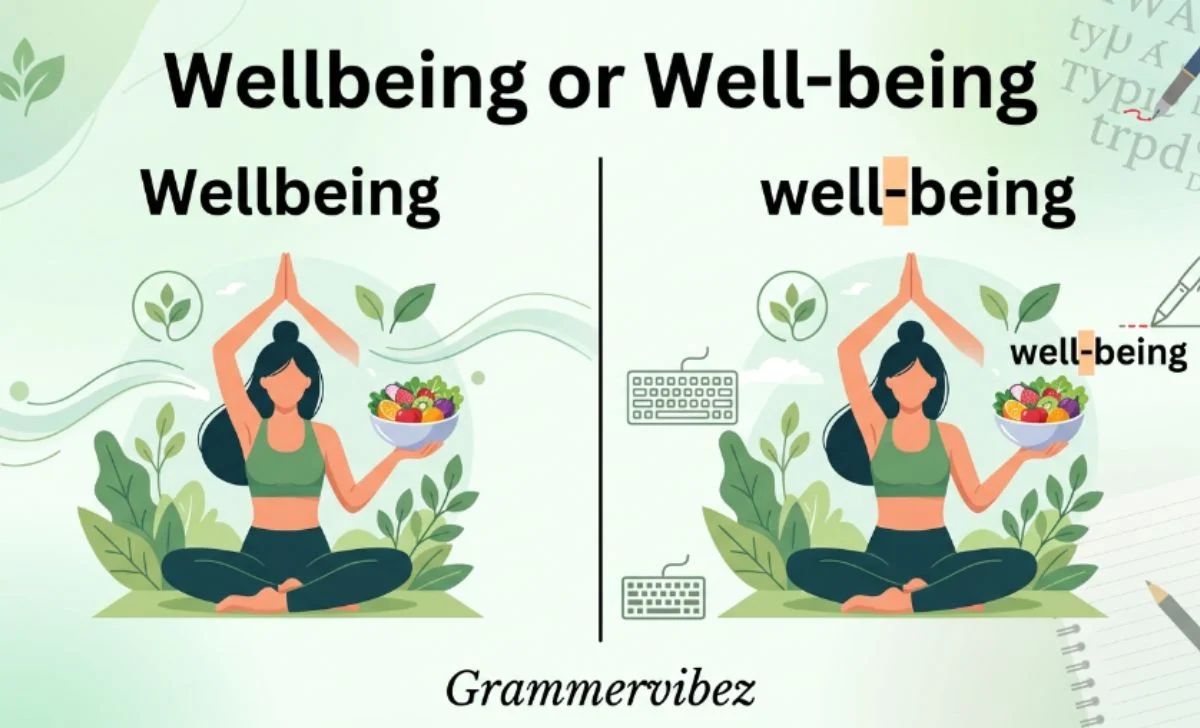
The most correct and widely accepted form is well-being (with a hyphen).
Wellbeing (one word) is also used in modern British English.
Well being (two words) is generally incorrect when used as a noun.
👉 If you are unsure, always use well-being.
What Does Well-being Mean?
Well-being refers to the state of being healthy, happy, and comfortable in life. It includes physical health, mental stability, emotional balance, and overall life satisfaction. It is a broad term used in healthcare, education, psychology, and daily communicatio
Well-being vs Wellbeing vs Well Being
✔ Well-being (Correct Standard Form
Well-being is the most accepted and formal version used in academic and professional writing. It is recognized in dictionaries and is preferred in global English standards.
Examples:
- Mental well-being is important.
- Employee well-being improves productivity.
✔ Wellbeing (One Word)
Wellbeing is commonly used in modern British English. It appears in newspapers, books, and online content, but it is slightly less formal than the hyphenated form.
Examples:
- Student wellbeing programs are growing.
- Workplace wellbeing is improving.
❌ Well being (Two Words)
Well being is not correct when used as a noun. It is considered a spelling mistake in formal writing.
Incorrect:
- My well being is important ❌
Correct:
- My well-being is important ✔
Comparison Table
| Form | Correctness | Usage | Example |
|---|---|---|---|
| Well-being | ✔ Standard | Formal writing | mental well-being |
| Wellbeing | ✔ Acceptable | Modern UK usage | student wellbeing |
| Well being | ❌ Incorrect | Avoid | ❌ my well being |
UK vs US Usage
In British English, both well-being and wellbeing are used, but wellbeing is more common in informal writing. In American English, well-being is preferred in most formal contexts. For international or academic writing, well-being is the safest choice.
Examples in Sentences
- Good sleep improves your well-being.
- Exercise supports mental well-being.
- Workplace wellbeing is improving in many companies.
- Financial stress affects emotional well-being.
Common Mistakes
❌ I care about my well being
✔ I care about my well-being
❌ Student well being is important
✔ Student well-being is important
Synonyms of Well-being
- Wellness
- Health
- Happiness
- Comfort
- Welfare
- Life satisfaction
FAQs
Is wellbeing correct?
Yes, but well-being is more standard and widely accepted.
Which is correct: wellbeing or well-being?
Both are used, but well-being is safest for formal writing.
Is well being correct?
No, it is incorrect as a noun form.
Conclusion
Understanding the difference between well-being, wellbeing, and well being is very important for correct English writing.
While all three forms appear in modern usage, the most standard and widely accepted form is well-being with a hyphen.
It is preferred in academic writing, professional communication, and formal English because it follows grammatical rules and is recognized in major dictionaries.
Wellbeing is also used in modern British English, but it is slightly less formal. The form well being is generally incorrect when used as a noun and should be avoided.
If you are ever unsure, always choose well-being because it is safe, correct, and accepted globally in all contexts.