Last Updated on May 15, 2026 by ramzancloudeserver@gmail.com
Have you ever wondered whether it is “canceled” or “cancelled”? Many writers get confused because both spellings appear in emails, news articles, and online content.
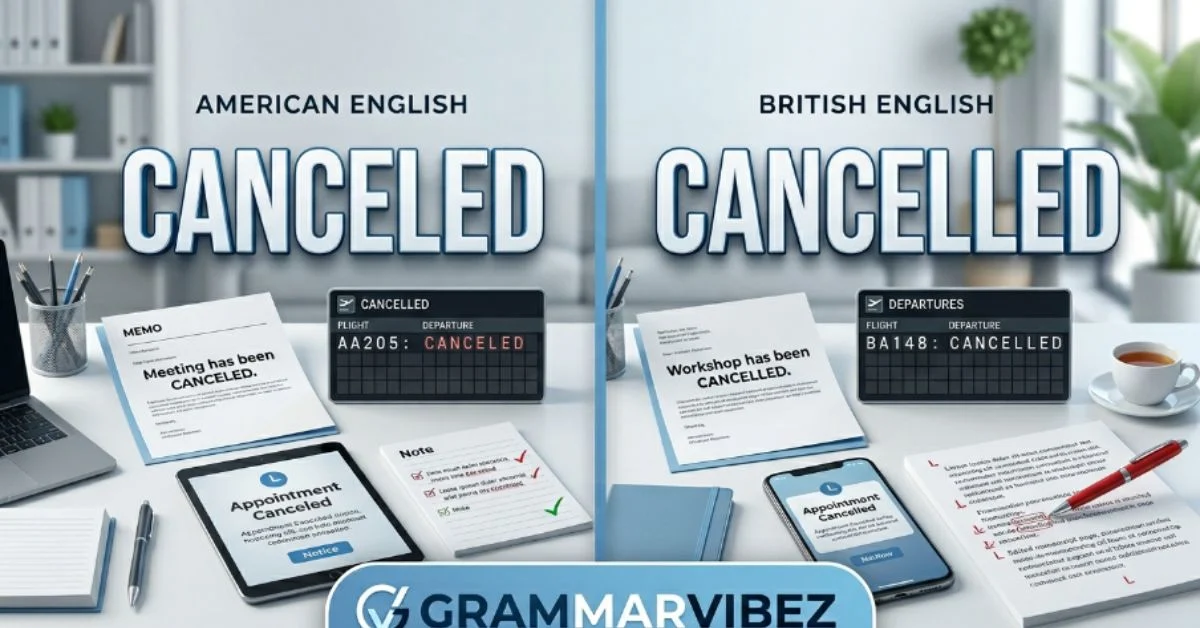
The difference mainly depends on regional English rules. American English prefers “canceled,” while British English uses “cancelled.”
The same pattern appears in words like “traveled” and “travelled.” People also search for terms like “cancelation or cancellation” and “cancel past tense” to find the correct form.
In this guide, you will learn the spelling differences, AP Style rules, common mistakes, and the best usage for professional writing, SEO content, and everyday communication.
Quick Answer
Both canceled and cancelled are correct.
- Canceled is preferred in American English.
- Cancelled is preferred in British English.
Examples
- The flight was canceled due to rain. (US English)
- The meeting was cancelled yesterday. (UK English)
The verb “cancel” means to stop, end, or call something off.
The Origin of Canceled vs Cancelled
The word “cancel” comes from the Latin word cancellare, meaning “to cross out.”
Over time, English developed two spelling systems:
- American English simplified many double-letter words
- British English kept traditional double consonants
That is why Americans write:
- canceled
- traveled
- labeled
While British English uses:
- cancelled
- travelled
- labelled
Cancel Past Tense
The past tense of “cancel” can be:
- canceled (US)
- cancelled (UK)
Both forms mean the same thing.
Examples
- They canceled the concert.
- The school cancelled classes.
British English vs American English Spelling
The spelling difference depends on region and writing style.
| American English | British English |
|---|---|
| Canceled | Cancelled |
| Canceling | Cancelling |
| Labeled | Labelled |
| Traveled | Travelled |
Comparison Table
| Word Variation | Correct? | Region |
|---|---|---|
| Canceled | Yes | United States |
| Cancelled | Yes | UK/Commonwealth |
| Canceling | Yes | American English |
| Cancelling | Yes | British English |
| Cancalled | No | Incorrect spelling |
Canceled or Cancelled AP Style
Stylebook recommends using canceled with one “L.”
AP Style follows American English spelling rules.
AP Style Examples
- The event was canceled.
- The airline canceled flights.
If you write for:
- US news websites
- American blogs
- SEO content
- Journalism
Then “canceled” is usually the better choice.
Cancelation or Cancellation – Which Is Correct?
Both spellings exist, but cancellation is far more common and widely accepted.
Preferred Usage
- Cancellation ✔
- Cancelation ✔ (rare)
Examples
- Your cancellation request was approved.
- Flight cancellation fees may apply.
Most dictionaries and style guides prefer cancellation with double “L.”
Which Spelling Should You Use?
The best spelling depends on your audience.
| Audience | Recommended Spelling |
|---|---|
| United States | Canceled |
| United Kingdom | Cancelled |
| Canada | Cancelled |
| Australia | Cancelled |
| International SEO | Canceled |
Professional Advice
Use one spelling consistently throughout your article or website.
For global SEO, “canceled” often gets higher search volume because American English dominates online content.
Common Mistakes with Canceled vs Cancelled
People often mix both spellings in the same article.
Common Errors
| Incorrect Usage | Correct Usage |
|---|---|
| Cancalled | Canceled / Cancelled |
| Cancelation fee | Cancellation fee |
| The order cancel | The order was canceled |
| Cancelleded | Cancelled |
Writing Tip
Choose one regional style and stay consistent.
Canceled vs Cancelled in Everyday Examples
In Emails
“The appointment has been canceled.”
In News Headlines
“Flights canceled after heavy storms.”
In Social Media
“My weekend plans got cancelled again!”
In Business Writing
“The canceled order will be refunded within five days.”
Cancelled Appointment Example
“The doctor’s appointment was cancelled due to bad weather.”
Canceled Sign Example
“The store placed a canceled sign on the event poster.”
Canceled Synonym List
Sometimes you can avoid repeating “canceled” by using synonyms.
| Word | Meaning |
|---|---|
| Called off | Stopped before happening |
| Abandoned | Left unfinished |
| Postponed | Delayed until later |
| Revoked | Officially removed |
| Withdrawn | Taken back |
| Scrapped | Completely removed |
Example
- The concert was called off.
- The order was withdrawn.
Canceled vs Cancelled – Google Trends & Usage Data
Search trends show clear regional differences.
Popular Searches
- canceled or cancelled ap style
- cancelation or cancellation
- cancel past tense
- canceled order
- cancelled appointment
- canceled synonym
Search Popularity by Country
| Country | Common Spelling |
|---|---|
| United States | Canceled |
| United Kingdom | Cancelled |
| Canada | Cancelled |
| Australia | Cancelled |
American spelling dominates search engines globally, especially in SEO content.
FAQs
Is it canceled or cancelled?
Both are correct. “Canceled” is American English, while “cancelled” is British English.
What is the AP style spelling?
AP Style uses canceled with one “L.”
Is cancelation wrong?
No, but cancellation is more common and preferred.
What is the past tense of cancel?
The past tense can be “canceled” or “cancelled.”
Which spelling should I use for SEO?
“Canceled” is often better for global SEO because American English has higher search volume.
What is a synonym for canceled?
Common synonyms include called off, postponed, withdrawn, and scrapped.
How do you use cancelled appointment in a sentence?
“The cancelled appointment was moved to next week.”
Conclusion
The difference between “canceled” and “cancelled” mainly depends on regional English spelling rules.
American English prefers “canceled,” while British English uses “cancelled.” Both spellings are correct and widely accepted.
The same rule applies to words like “traveled” and “travelled.” If you write for a US audience or follow AP style, use “canceled.”
For UK or Commonwealth readers, “cancelled” is the better choice. In SEO writing, “canceled” often gets more search traffic globally.
The most important thing is consistency. Choose one spelling style and use it throughout your article to keep your writing professional, clear, and easy to read.

John E. Warriner shares clear and practical grammar insights at GrammarVibez.com, helping readers understand confusing words and spelling differences with ease and confidence.