Last Updated on June 11, 2026 by ramzancloudeserver@gmail.com
Many English learners often get confused between make do and make due because both phrases sound similar in pronunciation.
However, only one of them is correct in standard English writing. This confusion leads to mistakes in exams, emails, academic writing, and professional communication.
Many people assume “make due” is correct because the word “due” exists in English, but this is actually incorrect in this context.
In this guide, you will learn the correct meaning of make do, its origin, grammar usage, examples, and differences.
You will also understand why “make due” is wrong and how to avoid this common English mistake in real-life writing and speaking.
Quick Answer
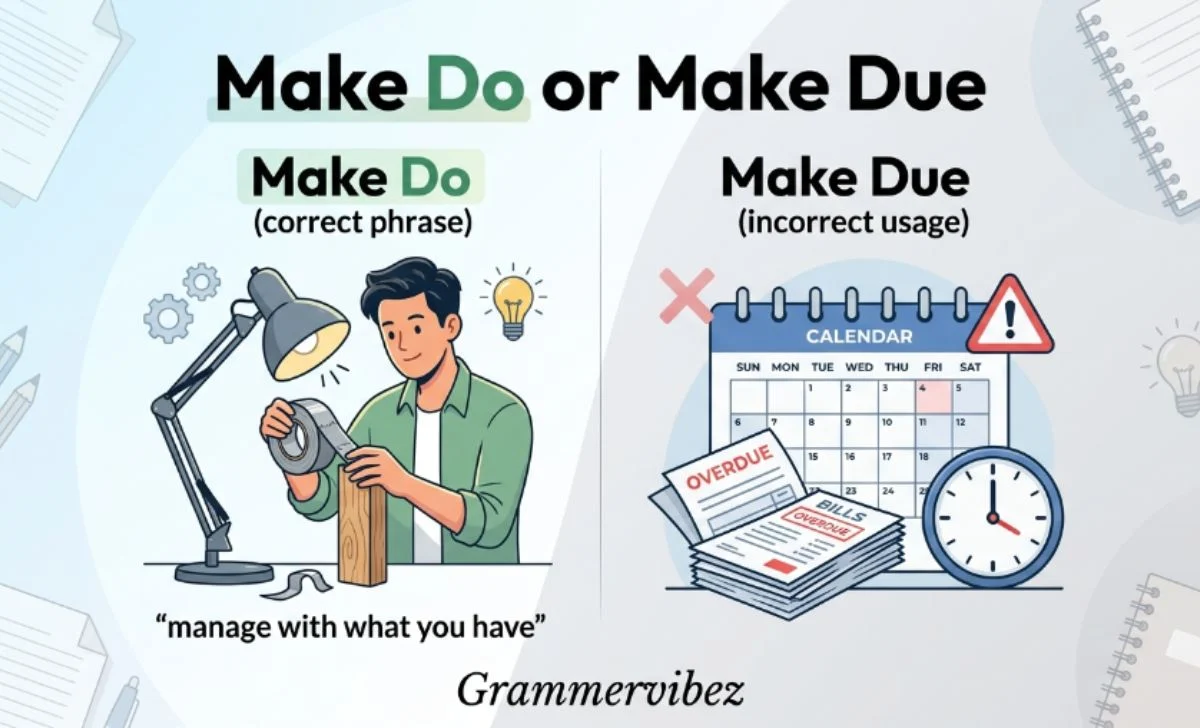
The correct phrase is make do.
❌ “make due” is incorrect in standard English.
“Make do” means to manage or cope with what is available, even if it is not enough or ideal.
Examples:
- We had no chairs, so we had to make do with boxes.
- I don’t have enough time, so I will make do with a short reply.
- They had to make do with limited resources during the project.
👉 “Make due” is a common spelling mistake caused by confusion with the word “due.”
The Origin of Make Do
The phrase make do comes from older English where the word “do” meant to manage, act, or cope with a situation. Over time, it became a fixed idiom meaning to survive or manage with limited resources.
The confusion started because:
- “due” is a common English word
- It sounds similar to “do” in speech
- Learners assume it relates to responsibility or payment
However, historically and grammatically, “do” is the correct word, not “due.”
British English vs American English Usage
There is no difference between British and American English for this phrase.
Both follow the same rule:
✔ make do
❌ make due (incorrect everywhere)
👉 This means the phrase is globally standard and not region-specific.
Which Spelling Should You Use?
You should always use make do in:
- Exams
- Academic writing
- Emails
- Business communication
- Daily English speaking
❌ Avoid “make due” in all situations.
👉 The safest choice is always make do.
Common Mistakes with Make Do
Many learners mistakenly replace “do” with “due.”
❌ Incorrect:
- I will make due with less time.
- She made due with what she had.
- They are making due in the office.
✔ Correct:
- I will make do with less time.
- She made do with what she had.
- They are making do in the office.
👉 The error happens due to sound similarity, not grammar rule.
Make Do in Everyday Life Examples
“Make do” is widely used in daily communication.
📧 Emails:
- We are short on staff, so we will make do this week.
🏢 Workplace:
- The team had to make do with fewer tools.
📰 News:
- Families had to make do after the disaster.
💬 Informal English:
- No internet today, so I’ll make do with offline work.
Make Do – Usage Insight
This phrase is commonly searched by English learners because:
- It is often misheard
- It looks similar to “make due”
- It appears in exams and writing tests
- It is part of everyday English idioms
Most search intent is correction-based learning.
Comparison Table
| Phrase | Correctness | Meaning | Usage |
|---|---|---|---|
| make do | ✔ Correct | Manage with available resources | Formal + Informal |
| make due | ❌ Incorrect | No valid meaning here | Avoid |
FAQs
Is “make due” correct English?
No, it is incorrect in standard English.
What is the correct phrase: make do or make due?
The correct phrase is make do.
What does “make do” mean?
It means to manage with what you have.
Why do people say “make due”?
Because “due” sounds similar to “do,” causing confusion.
Can I use “make do” in exams?
Yes, it is fully correct.
Is “make do” formal or informal?
It is used in both formal and informal English.
Is there any UK or US difference?
No, both use “make do.”
Conclusion
Understanding the difference between make do and make due is important for correct English writing.
Many learners mistakenly use “make due” because it looks familiar and sounds similar, but this is not correct in standard English.
The correct phrase is make do, which means to manage or cope with limited resources or available situations.
This phrase is widely used in academic writing, business communication, journalism, and everyday English. There is no difference between British and American English usage.
If you are ever unsure, always choose make do because it is grammatically correct, globally accepted, and safe in all contexts.

Wilson Follett delivers sharp editorial insight at GrammarVibez.com, helping readers refine their writing, avoid common mistakes, and master precise word usage.