Last Updated on June 11, 2026 by ramzancloudeserver@gmail.com
Understanding the difference between has been, have been, and had been is one of the most important parts of English grammar.
These phrases are commonly used in daily communication, academic writing, business English, and exams.
However, many learners get confused because all three come from the same verb “be”, but are used in different tenses.
In this guide, you will learn the meaning, usage, rules, structure, and examples of all three forms in a very simple way.
Quick Overview
Before going into detail, here is a simple summary:
- Has been → Present perfect (he, she, it)
- Have been → Present perfect (I, we, you, they)
- Had been → Past perfect (all subjects)
👉 The main difference is subject + time (tense)
What is “Has Been”?
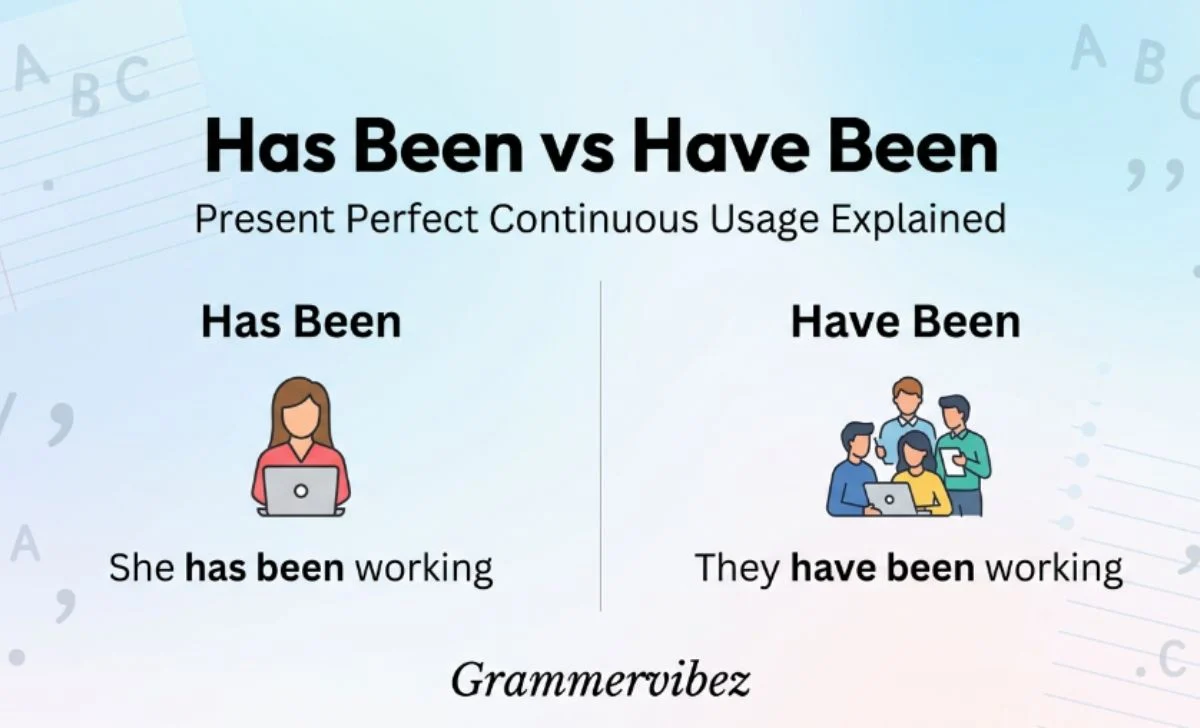
Has been is used in the present perfect tense. It is used when talking about an action that started in the past but is still relevant in the present.
Structure:
Subject + has been + (verb-ing)
Used with:
- He
- She
- It
- Singular names
Examples:
- She has been working here for five years.
- He has been very busy lately.
- It has been raining since morning.
- The company has been growing fast.
Usage Explanation:
We use has been when talking about:
- ongoing situations
- repeated actions
- recent events affecting the present
👉 It connects past + present
What is “Have Been”?
Have been is also part of the present perfect tense, but used with plural or different subjects.
Structure:
Subject + have been + (verb-ing)
Used with:
- I
- We
- You
- They
Examples:
- I have been studying English for two years.
- They have been working on this project.
- We have been waiting for the bus.
- You have been very helpful.
Usage Explanation:
We use have been to show:
- actions continuing from past to present
- experiences over time
- repeated actions
👉 It shows continuity or experience
What is “Had Been”?
Had been is used in the past perfect tense. It shows an action that happened before another action in the past.
Structure:
Subject + had been + (verb-ing)
Used with:
- I
- He
- She
- It
- We
- They
Examples:
- She had been working before the meeting started.
- They had been friends before the argument.
- I had been sleeping when you called.
- The shop had been closed before we arrived.
Usage Explanation:
We use had been when:
- one past action happened before another past action
- we want to show sequence in the past
👉 It shows past before past
Comparison Table
| Form | Tense | Subject | Meaning | Example |
|---|---|---|---|---|
| Has been | Present Perfect | He/She/It | Ongoing from past to present | She has been busy. |
| Have been | Present Perfect | I/We/You/They | Ongoing from past to present | They have been working. |
| Had been | Past Perfect | All subjects | Past before past action | He had been waiting. |
Present Perfect Continuous Structure
All three forms are often used in continuous sentences:
Structure:
has/have/had + been + verb(-ing)
Examples:
- She has been studying for hours.
- They have been playing football.
- I had been waiting for a long time.
This shows actions that continue over time
Key Differences Explained Simply
1. Subject Difference
- Has been → singular (he/she/it)
- Have been → plural or I/you/we/they
- Had been → past reference (any subject)
2. Time Difference
- Has/Have been → present connection
- Had been → past before past
3. Usage Focus
- Has/Have been → ongoing situation
- Had been → completed past action sequence
Common Mistakes
She have been working here.
She has been working here.
They has been waiting.
They have been waiting.
I has been busy.
I have been busy.
He had been go to school.
He had been going to school.
Real-Life Usage Examples
Daily Life:
- I have been feeling tired today.
- She has been cooking since morning.
Office:
- They have been discussing the project.
- He has been managing the team.
Past Story:
- I had been studying when the power went out.
- She had been working before she resigned.
Easy Memory Trick
👉 “Has” = He / She / It
👉 “Have” = I / We / You / They
👉 “Had” = Past before past
If you remember this, you will never confuse them.
Why Learners Get Confused
These forms are confusing because:
- All come from the verb “be”
- All use “been”
- Only helping verb changes (has/have/had)
That’s why understanding tense + subject together is important.
FAQs
What is the difference between has been and have been?
Has been is used with he/she/it, while have been is used with I/we/you/they.
When do we use had been?
We use had been for actions that happened before another past action.
Can we use has been in past tense?
No, it is only used in present perfect tense.
Is “I has been” correct?
No, correct form is “I have been.”
Conclusion
Understanding has been, have been, and had been is essential for mastering English grammar. The key difference lies in subject and tense usage.
Once you understand the simple rule, has for he/she/it, have for I/we/you/they, and had for past actions, you can use these forms correctly in speaking and writing.
With practice and examples, these structures become easy and natural.

I am Mignon Fogarty, a grammar expert dedicated to making English simple, clear, and easy to learn.I write for Grammervibez, helping people improve their grammar, writing skills, and confidence in English.