Last Updated on April 12, 2026 by ramzancloudeserver@gmail.com
Many English learners get confused between “themselves” and “theirselves” because both sound similar and appear to follow normal grammar rules.
This confusion often shows up in speaking, writing, exams, and social media posts. People search this keyword because they want a clear answer: Which one is correct English?
The truth is simple, but important for proper writing. One form is standard English used in schools, books, and professional communication, while the other is considered non-standard or incorrect in modern grammar.
However, historical usage and dialectal English sometimes make the difference less obvious, which increases confusion.
Understanding this difference is important because using the wrong reflexive pronoun can make your English sound unnatural or incorrect.
In this guide, you will learn the exact meaning of themselves vs theirselves, their origin, grammar rules, common mistakes, real-life examples, and usage differences.
By the end, you will clearly know which word to use in every situation without hesitation.
Quick Answer
English Grammar
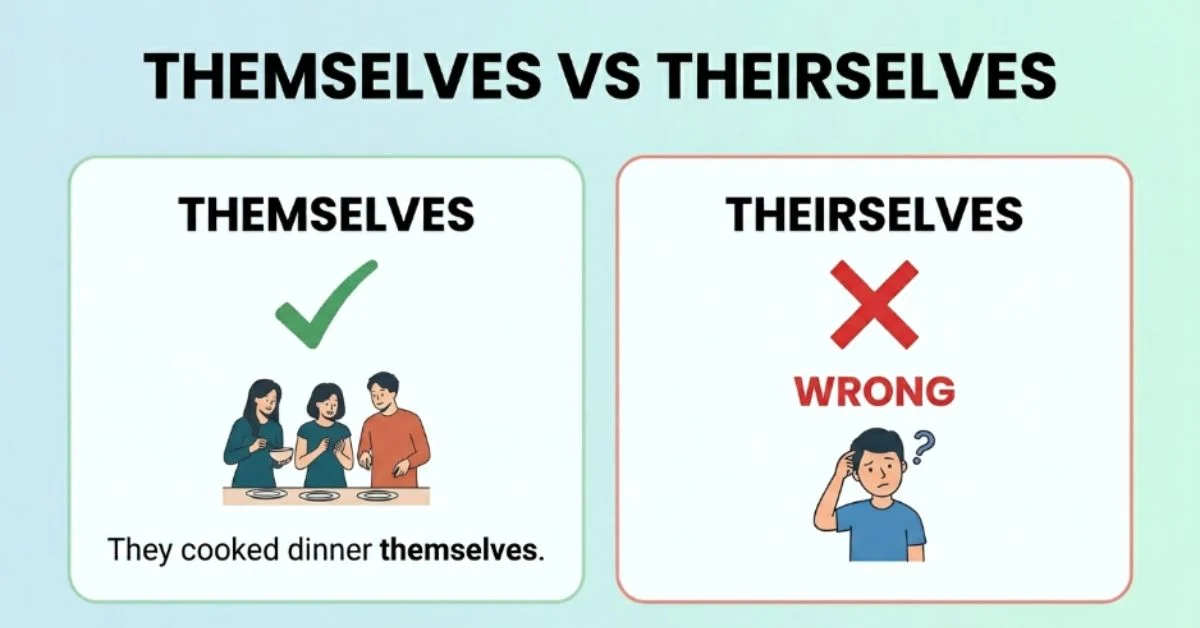
Themselves is the correct standard English reflexive pronoun.
Theirselves is non-standard and considered incorrect in modern English.
Examples:
- They helped themselves to the food. ✔
- They helped theirselves to the food. ✖ (incorrect in standard English)
👉 Conclusion: Always use themselves
The Origin of Themselves vs Theirselves
- Themselves comes from Old English reflexive structures combining “them” + “selves”
- Theirselves developed later in some regional dialects as an over-regularized form
Historically, English speakers tried to make pronouns more consistent, which created forms like “theirselves,” but it never became part of standard grammar.
British English vs American English Usage
| Feature | Themselves | Theirselves |
|---|---|---|
| Standard English | ✔ Yes | ❌ No |
| American English | ✔ Used | ❌ Not used |
| British English | ✔ Used | ❌ Not used |
| Formal writing | ✔ Correct | ❌ Incorrect |
| Dialect usage | Standard form | Some informal dialects |
👉 Both UK and US English reject “theirselves” in formal writing.
Which One Should You Use?
✔ Always use themselves when:
- Writing essays
- Sending emails
- Taking exams
- Writing blogs or SEO content
- Speaking formal English
❌ Avoid theirselves unless:
- You are showing dialect or informal speech in fiction
- You are quoting non-standard spoken language
Common Mistakes with Themselves vs Theirselves
They should take care of theirselves
They should take care of themselves
The children enjoyed theirselves
The children enjoyed themselves
People hurt theirselves
People hurt themselves
Mistake happens due to false pattern thinking (like “myself, yourself, theirself” logic)
Themselves in Everyday Examples
📧 Email:
- The team prepared themselves for the meeting.
📰 News:
- The players blamed themselves for the loss.
📱 Social Media:
- People should focus on improving themselves.
📄 Formal Writing:
- Students must evaluate themselves honestly.
Themselves vs Theirselves – Usage Trend
- Themselves → extremely high usage in all English contexts
- Theirselves → rare, non-standard, mostly dialectal speech
Modern English education systems worldwide only teach themselves as correct.
Comparison Table
| Feature | Themselves | Theirselves |
|---|---|---|
| Grammar status | Standard pronoun | Non-standard form |
| Correctness | ✔ Correct | ❌ Incorrect |
| Usage | Formal + informal | Dialect only |
| Acceptance | Global | Very limited |
| Writing safety | Safe | Not recommended |
FAQs
1. Is “theirselves” correct English?
No, it is not correct in standard English.
2. Why do people say “theirselves”?
It comes from informal speech and incorrect analogy with “yourself / yourselves.”
3. What is the correct word?
The correct reflexive pronoun is themselves.
4. Can I use “theirselves” in writing?
No, avoid it in academic or professional writing.
5. Is “theirselves” used anywhere?
Only in some regional dialects or informal speech.
6. Why is “themselves” correct?
Because it follows historical and standardized English grammar rules.
7. Will using “theirselves” affect my English?
Yes, it may make your English look incorrect or non-standard.
Conclusion
The difference between themselves and theirselves is very important for correct English usage.
While both may sound similar, only “themselves” is accepted in standard English grammar.
It is used in academic writing, professional communication, exams, and everyday speech across all English-speaking countries.
On the other hand, “theirselves” is not considered correct in modern English. It appears mainly in informal speech or regional dialects, but it should be avoided in formal contexts.
Using it in writing can make your English look incorrect or unprofessional.
If you want to improve your grammar and sound natural in English, always choose “themselves.” It is the safe, correct, and globally accepted form.
Mastering this small difference will help you avoid one of the most common reflexive pronoun mistakes in English writing.

Lindley Murray brings classic grammar knowledge to GrammarVibez.com, guiding readers through tricky word choices and spelling rules with simple and timeless explanations.