Last Updated on May 7, 2026 by ramzancloudeserver@gmail.com
Many people search for “better than or better then” because the two words look and sound similar. They often appear in everyday writing, emails, school work, and social media posts.
Even fluent English speakers mix them up. This confusion happens because both words are common in English grammar, but they have very different meanings.
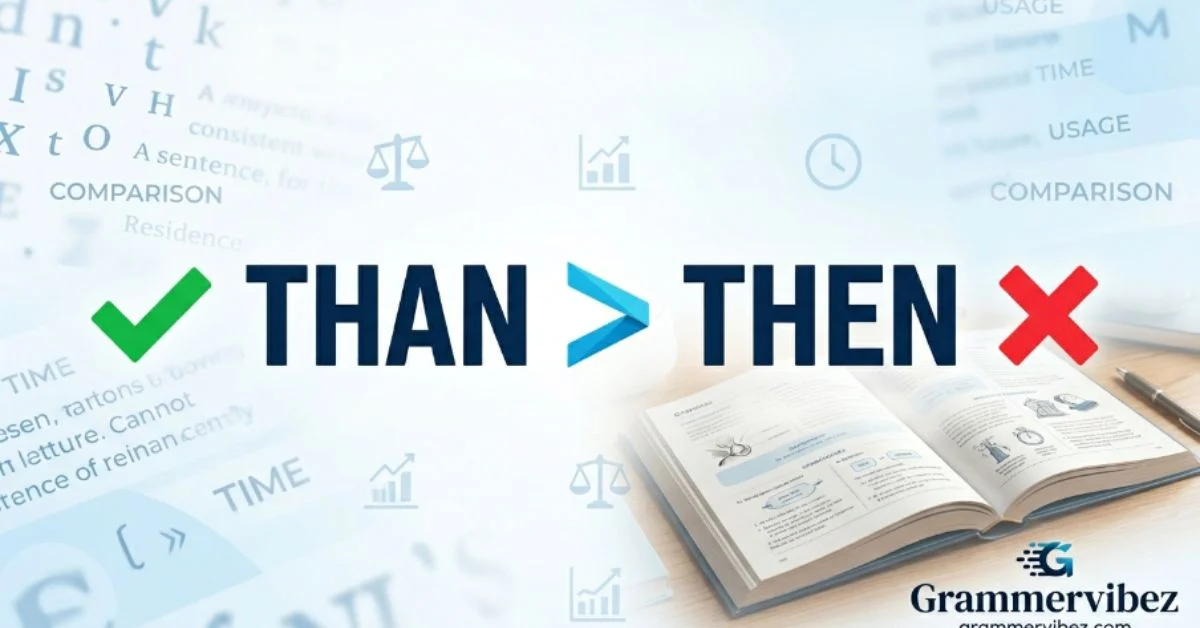
The correct phrase is “better than.” The word “than” is used for comparisons, while “then” relates to time or sequence. A small spelling difference changes the meaning of the whole sentence.
For example:
- Correct: She is better than me.
- Incorrect: She is better then me.
Learning the difference helps improve writing clarity and grammar accuracy. It also prevents mistakes in professional and academic communication. In this guide, you will learn the correct usage, spelling rules, examples, common mistakes, and the difference between “than” and “then” in simple English.
Quick Answer
The correct phrase is “better than.”
Use “than” when making a comparison.
Correct Examples
- This phone is better than the old one.
- Ali runs faster than Ahmed.
- Writing daily is better than waiting.
Incorrect Examples
- This phone is better then the old one.
- Ali runs faster then Ahmed.
Simple Rule
- Than = comparison
- Then = time or sequence
A quick memory trick is:
If you compare two things, always use than.
The Origin of Better Than or Better Then
The word “than” comes from Old English thonne. It was used to compare people, actions, or objects.
The word “then” also comes from Old English, but it referred to time, order, or what happens next.
Over time, English spelling changed, but the meanings stayed different.
Why People Confuse Them
People confuse these words because:
- They sound similar.
- They differ by only one letter.
- Fast typing causes spelling mistakes.
- Auto-correct sometimes misses the error.
Even native English speakers make this mistake in casual writing.
British English vs American English Spelling
Unlike words such as “colour” and “color,” the phrase “better than” stays the same in both British and American English.
There is no spelling difference between UK and US English for this phrase.
| Usage | British English | American English |
|---|---|---|
| Correct comparative phrase | Better than | Better than |
| Incorrect form | Better then | Better then |
| Grammar rule | Comparison | Comparison |
Examples in British English
- Tea is better than coffee for me.
Examples in American English
- This car is better than the last model.
Both forms follow the same grammar rule.
Which Spelling Should You Use?
You should use “better than” in all English writing.
Use “Better Than” For:
- Academic writing
- Business emails
- Blog posts
- Social media captions
- School assignments
- Professional communication
Avoid “Better Then”
The phrase “better then” is usually a grammar mistake unless “then” refers to time.
Example
- Correct: Life is better than before.
- Correct with time meaning: Better then than never.
The second example is rare and depends on sentence context.
Common Mistakes with Better Than or Better Then
Many writers use “then” instead of “than” by accident.
Common Error #1
❌ She is better then her sister.
✅ She is better than her sister.
Common Error #2
❌ This movie is better then the first one.
✅ This movie is better than the first one.
Common Error #3
❌ My new laptop works better then my old one.
✅ My new laptop works better than my old one.
Easy Trick to Remember
- Than compares.
- Then tells time.
Example:
- We ate dinner, then watched TV.
- Pizza is better than burgers.
Better Than or Better Then in Everyday Examples
In Emails
- Your latest report looks better than the previous version.
In News Writing
- The economy performed better than experts expected.
In Social Media
- This season is better than last year!
In Formal Writing
- Online learning can be better than traditional methods in some cases.
In Casual Conversation
- Today feels better than yesterday.
Better Than or Better Then – Google Trends & Usage Data
Search data shows that “better than” is far more popular than “better then.”
People commonly search for:
- better than meaning
- than vs then
- is better then correct
- better than examples
Countries Where Searches Are Common
- United States
- United Kingdom
- Canada
- Australia
- India
- Pakistan
Most searches come from students, writers, bloggers, and English learners who want grammar clarification.
Comparison Table: Better Than vs Better Then
| Phrase | Correct? | Meaning | Example |
|---|---|---|---|
| Better than | Yes | Used for comparison | This phone is better than mine. |
| Better then | Usually no | Grammar mistake in comparison | Incorrect usage |
| Then | Yes | Refers to time/order | We went home then slept. |
| Than | Yes | Used in comparisons | He is taller than me. |
FAQs
Is “better than” correct?
Yes. “Better than” is the correct phrase for comparisons.
Is “better then” ever correct?
Usually no. It is only correct when “then” relates to time.
What is the difference between than and then?
“Than” compares things. “Then” refers to time or sequence.
Why do people confuse than and then?
They sound similar and differ by only one letter.
How can I remember the difference?
Use “than” for comparisons and “then” for time.
Is “better than me” grammatically correct?
Yes. It is common and acceptable in modern English.
Which is used in formal writing?
“Better than” is the correct choice in formal writing.
Conclusion
The confusion between “better than” and “better then” is very common in English grammar.
Even experienced writers sometimes make this mistake because the two words sound alike. However, their meanings are completely different.
The phrase “better than” is the correct form when comparing two things, people, or ideas. The word “than” always introduces comparison.
On the other hand, “then” relates to time, order, or what happens next. Understanding this small difference can greatly improve your writing clarity and grammar accuracy.
Whether you are writing emails, blog posts, school assignments, or social media captions, using the correct phrase makes your communication look more professional.
A simple memory trick is to remember that “than” compares while “then” tells time.
If you want clean and error-free English writing, always double-check comparison phrases before publishing.
Using “better than” correctly will help you avoid one of the most common grammar mistakes in English.

John E. Warriner shares clear and practical grammar insights at GrammarVibez.com, helping readers understand confusing words and spelling differences with ease and confidence.