Last Updated on April 20, 2026 by ramzancloudeserver@gmail.com
Do you write “since” or “sense”? Many people mix these two words. They sound the same, but they have very different meanings.
This confusion is common because these words are homophones. That means they sound alike but have different meanings and spellings. So it is easy to make mistakes, especially in fast writing like emails or social media.
Using the wrong word can change your sentence. It can make your message unclear or incorrect. That’s why many learners search for this topic.
In this guide, you will learn:
- The meaning of since and sense
- When to use each word
- Simple rules to remember
- Common mistakes and examples
Let’s make it clear and easy.
Quick Answer
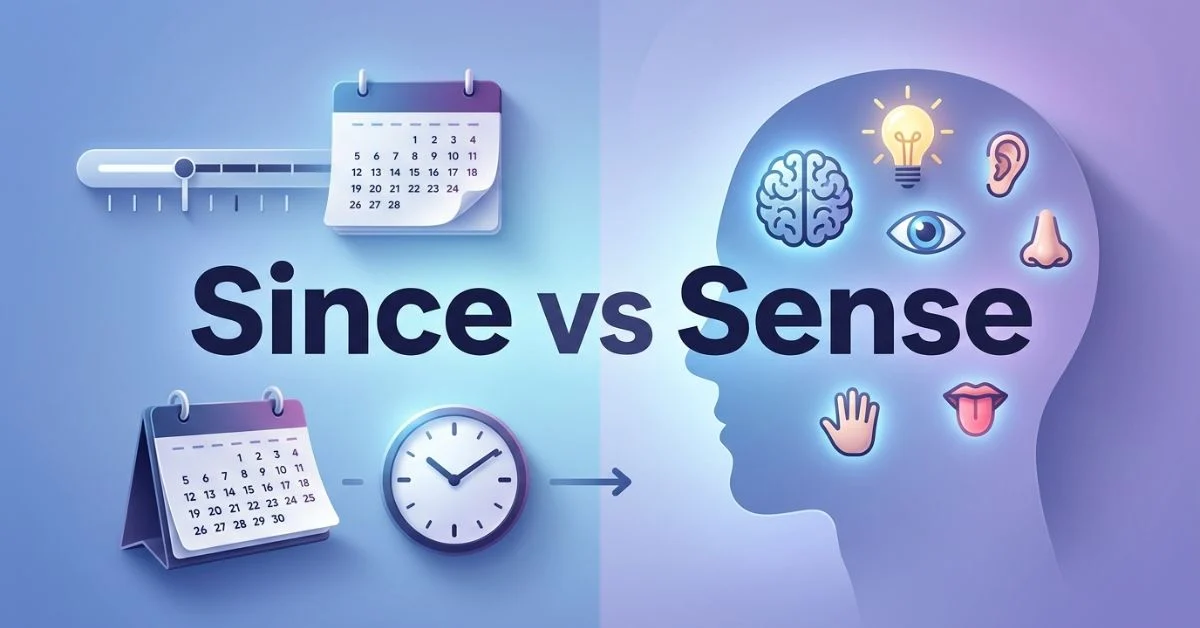
👉 “Since” is used for time or reason
👉 “Sense” is about feeling, meaning, or understanding
Examples:
- ✔️ I have lived here since 2020 (time)
- ✔️ Since you are here, let’s start (reason)
- ✔️ This makes sense (logic)
- ✔️ I have a strong sense of smell (feeling)
The Origin of Since or Sense
The two words come from different roots.
Since:
- Comes from Old English
- Used to show time or cause
Sense:
- Comes from Latin (sensus)
- Means feeling, awareness, or understanding
👉 That is why they look similar but mean different things.
British English vs American English Spelling
Good news—there is no difference here.
👉 Both British English and American English use:
- since
- sense
Comparison Table
| Feature | Since | Sense |
|---|---|---|
| Type | Conjunction / preposition / adverb | Noun / verb |
| Meaning | Time or reason | Feeling or understanding |
| Used in UK | Yes | Yes |
| Used in USA | Yes | Yes |
| Spelling difference | No | No |
Which Spelling Should You Use?
It depends on your meaning.
✔️ Use since when:
- Talking about time → from past to now
- Giving a reason → similar to “because”
✔️ Use sense when:
- Talking about understanding → “makes sense”
- Talking about feelings → sight, smell, etc.
- Talking about logic or awareness
Simple Rule:
👉 Time / reason = since
👉 Meaning / feeling = sense
Common Mistakes with Since vs Sense
Here are common errors:
❌ Mistake 1: “Does this make since?”
✔️ Correct: Does this make sense?
❌ Mistake 2: Using “sense” for time
✔️ Correct: I have worked here since 2022
❌ Mistake 3: Confusing reason and meaning
✔️ Since = because
✔️ Sense = meaning
❌ Mistake 4: Ignoring context
👉 Always check what you want to say
Since vs Sense in Everyday Examples
📧 Email:
- I have been working here since January
- Your idea makes perfect sense
🏢 Business:
- Since sales are low, we need changes
- This plan does not make sense
📱 Social Media:
- Been waiting since morning
- That makes no sense
📰 Writing:
- The law has existed since 1990
- There is a strong sense of justice
Since vs Sense – Google Trends & Usage Data
- Both words are used worldwide:
- USA
- UK
- Pakistan
- India
- Common search confusion:
- “does it make since or sense”
- “since vs sense difference”
Insight:
👉 “Sense” is often misspelled as “since”
👉 This mistake is very common in casual writing
Parts of Speech and Usage
Since:
- Conjunction → Since you came, things improved
- Preposition → Since Monday
- Adverb → I saw her long since
Sense:
- Noun → common sense, sense of humor
- Verb → I can sense danger
Comparison Table (All Differences)
| Feature | Since | Sense |
|---|---|---|
| Meaning | Time / reason | Feeling / understanding |
| Part of speech | Conjunction, preposition, adverb | Noun, verb |
| Example | Since 2020 | Makes sense |
| Common error | Used instead of sense | Used instead of since |
FAQs
1. What is the difference between since and sense?
Since is for time or reason.
Sense is for meaning or feeling.
2. Is it “make since” or “make sense”?
Correct phrase is make sense.
3. Can since mean because?
Yes. “Since” can mean because.
4. What does sense mean?
It means understanding, feeling, or awareness.
5. How do I remember the difference?
👉 Since = time
👉 Sense = meaning
6. Are since and sense homophones?
Yes. They sound the same but have different meanings.
7. Can sense be a verb?
Yes. Example: I can sense danger.
Conclusion
The difference between since and sense is simple once you understand their roles.
Even though they sound the same, they have very different meanings. Since is used for time and reason. Sense is used for understanding, logic, and feelings.
This confusion happens because they are homophones. Many people write “since” when they mean “sense,” especially in phrases like “make sense.”
To avoid mistakes, focus on meaning:
👉 If you talk about time or cause, use since
👉 If you talk about logic or feeling, use sense
Practice with simple sentences. Over time, it will feel natural.
Clear writing is about small choices. And this is one of them.

Lindley Murray brings classic grammar knowledge to GrammarVibez.com, guiding readers through tricky word choices and spelling rules with simple and timeless explanations.