Last Updated on April 18, 2026 by ramzancloudeserver@gmail.com
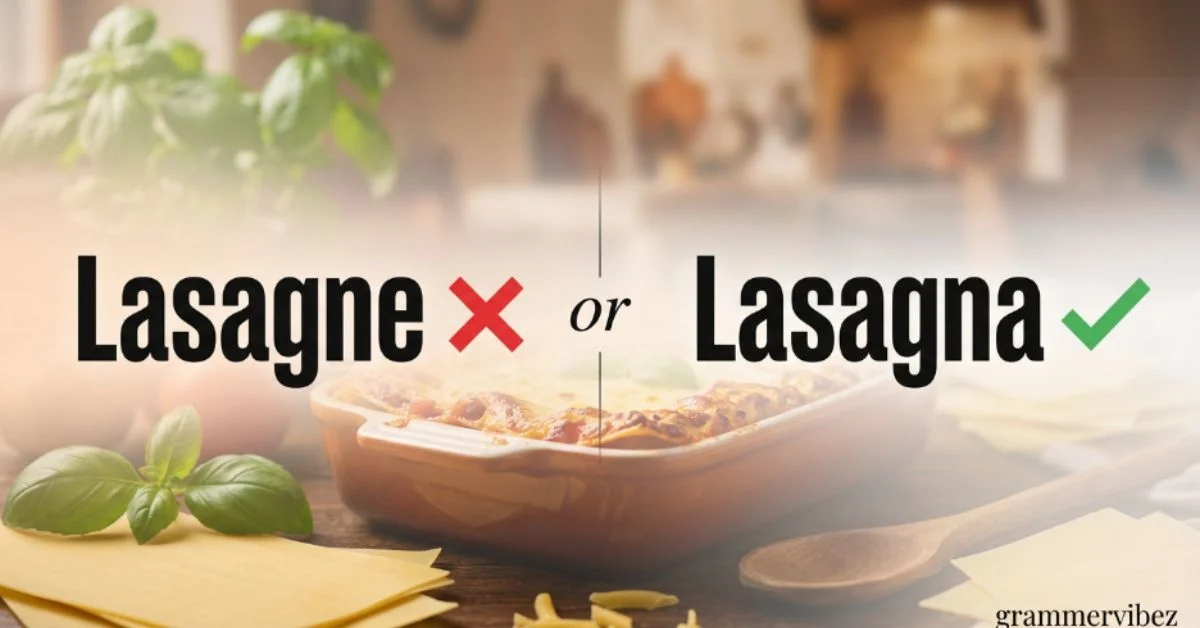
Many people get confused when they see “lasagne or lasagna” on menus, recipes, or food blogs. Both words look similar, but users often wonder which one is correct.
This confusion is very common because the dish is popular worldwide, and different countries use different spellings.
People search this keyword to understand whether “lasagna” is American and “lasagne” is British, or if one of them is wrong.
In reality, both are correct, but the usage depends on region and language style.
This guide explains everything in a simple way. You will learn the meaning of both terms, their origin, spelling differences, and real usage in everyday life.
You will also see examples from restaurants, cooking recipes, and international menus.
As a result, you will clearly understand when to use lasagna and when to use lasagne without confusion. This will help you in writing, cooking blogs, SEO content, and even while ordering food internationally.
Quick Answer
Both spellings are correct.
- Lasagna → American English
- Lasagne → British English / Italian origin
Examples:
- I cooked lasagna for dinner (US style)
- We ordered lasagne at the restaurant (UK style)
The Origin of Lasagne or Lasagna
The word comes from the Italian language “lasagne”, which is the plural form of “lasagna.”
It originally comes from the Latin word “lasanum”, meaning cooking pot.
Over time, English adapted the word in two ways:
- America simplified it to lasagna
- Britain kept closer to Italian spelling lasagne
British English vs American English Spelling
| Term | Region | Origin Style | Usage |
|---|---|---|---|
| lasagna | American English | Simplified | Common in USA |
| lasagne | British English | Italian form | Common in UK/Commonwealth |
👉 Meaning is exactly the same.
Which Spelling Should You Use?
- ✔ Use lasagna if writing for US audience or food blogs targeting America
- ✔ Use lasagne if targeting UK, Europe, or Commonwealth readers
- ✔ For global content, you can use either—but stay consistent
👉 In SEO writing, match your audience region.
Common Mistakes with Lasagne or Lasagna
lasanya
lasagna / lasagne
lasgana
lasagna
❌ mixing both spellings in one article
✔ choose one style and stay consistent
Lasagne or Lasagna in Everyday Examples
📧 Email:
- We are serving homemade lasagna tonight.
📰 News:
- The restaurant launched a new lasagne recipe.
📱 Social Media:
- Best lasagna I’ve ever tasted 🍝
📝 Formal Writing:
- The menu includes vegetarian lasagne options.
Lasagne or Lasagna – Google Trends & Usage Data
- “lasagna” is more popular globally in search volume
- “lasagne” is more common in UK and European searches
- Food blogs and recipe sites use both depending on audience
- Restaurant menus often switch spelling based on location
👉 Trend insight: “lasagna” dominates worldwide SEO traffic.
Comparison Table
| Variation | Region | Meaning | Usage |
|---|---|---|---|
| lasagna | US | baked pasta dish | global + US SEO |
| lasagne | UK | same dish | UK/Commonwealth |
| lasagne vs lasagna | global query | spelling confusion | high search intent |
FAQs
1. What is correct, lasagna or lasagne?
Both are correct depending on region.
2. Is lasagne Italian or English?
Lasagne is Italian in origin.
3. Why do Americans say lasagna?
Because American English simplified the spelling.
4. Do lasagna and lasagne taste different?
No, the dish is exactly the same.
5. Which spelling is more popular?
“Lasagna” is more popular globally.
6. Can I use both spellings?
Yes, but stay consistent in one article.
7. Is lasagna plural or singular?
Originally plural in Italian (“lasagne”).
Conclusion
In conclusion, both “lasagne” and “lasagna” are correct spellings of the same delicious Italian baked pasta dish. The difference comes from regional language styles rather than meaning.
“Lasagna” is commonly used in American English, while “lasagne” is preferred in British English and closer to the original Italian spelling.
Despite this difference, both words refer to the same recipe made with layers of pasta, sauce, cheese, and meat or vegetables.
Understanding this helps avoid confusion when reading menus, recipes, or food blogs from different countries.
It also improves your writing quality, especially if you are creating SEO content, food blogs, or restaurant descriptions.
As a result, you can confidently use either spelling depending on your audience. The most important rule is consistency, choose one style and stick with it in your writing.
With this knowledge, you will never get confused between lasagne or lasagna again, and you can use both terms correctly in global communication.

Lindley Murray brings classic grammar knowledge to GrammarVibez.com, guiding readers through tricky word choices and spelling rules with simple and timeless explanations.