Last Updated on June 11, 2026 by ramzancloudeserver@gmail.com
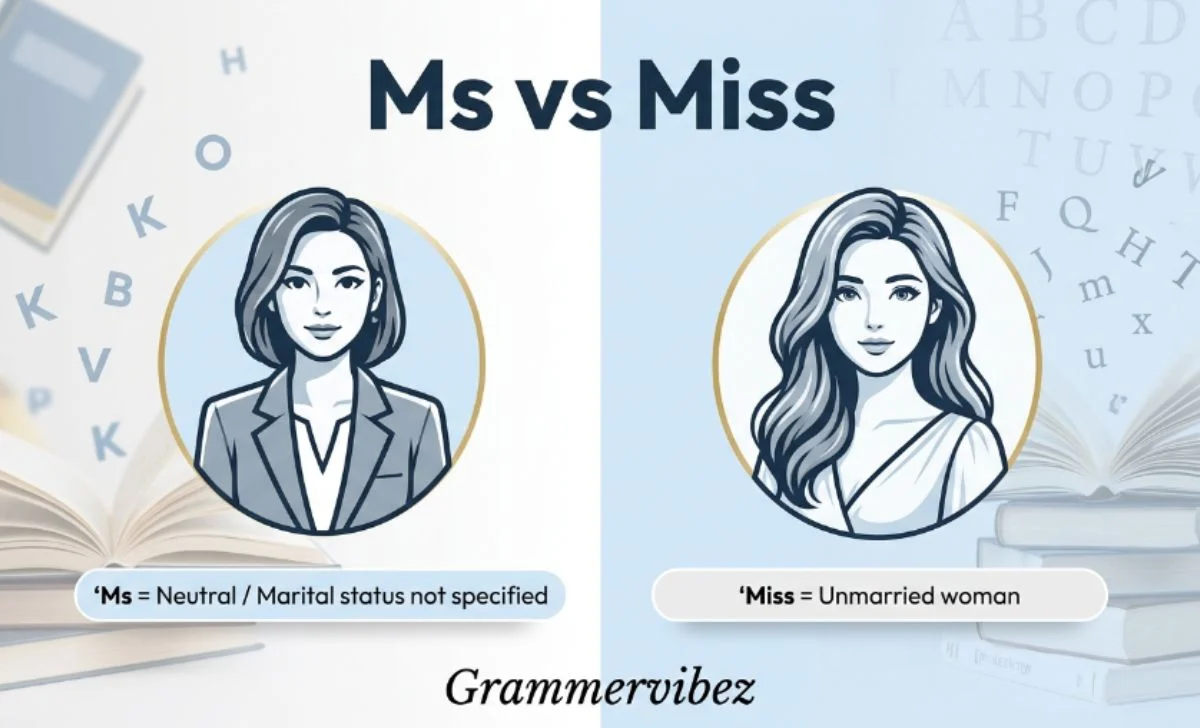
MS or Miss is a common confusion in English writing. These courtesy titles, Miss, Mrs., Ms., and Mx., are used to show respect, but each one has a different meaning and usage rule.
Using the wrong title can create misunderstanding in formal, academic, or professional communication.
This guide explains the difference between MS and Miss in a simple way, with clear rules and examples so you always choose the correct title.
Quick Answer
- Miss → Unmarried woman (traditional use)
- Mrs. → Married woman (traditional use)
- Ms. → Neutral female title (no marital status shown)
- Mx. → Gender-neutral title (no gender or marital status)
In modern English, Ms. is the safest and most widely used option
Comparison Table: Miss vs Mrs vs Ms vs Mx
| Title | Meaning | Marital Status | Gender Indication | Modern Usage |
|---|---|---|---|---|
| Miss | Unmarried or young woman | Yes | Female | Less common today |
| Mrs. | Married woman | Yes | Female | Traditional use |
| Ms. | Neutral female title | No | Female | Most widely used |
| Mx. | Gender-neutral title | No | Non-binary / neutral | Inclusive modern use |
What is Miss?
Miss is a traditional courtesy title used for a young or unmarried woman.
Examples:
- Miss Ali is our teacher
- Excuse me, Miss, you dropped your bag
- Miss Sarah won the competition
Modern usage: Mostly replaced by Ms. in professional writing
What is Mrs.?
Mrs. is used for a married woman.
Examples:
- Mrs. Khan is our neighbor
- Please send the form to Mrs. Ahmed
- Mrs. Brown is attending the meeting
👉 Note: Still used, but less common in modern professional writing
What is Ms.?
Ms. is a neutral title used for women regardless of marital status.
Examples:
- Ms. Ali is the manager
- I spoke with Ms. Johnson today
- Please contact Ms. Sara for details
This is the default safe option in modern English
What is Mx.?
Mx. is a gender-neutral title used for people who do not identify strictly as male or female.
Examples:
- Mx. Taylor will join the meeting
- Please contact Mx. Ali for support
- Mx. Johnson submitted the report
Used in inclusive workplaces and modern forms
When to Use Each Title
- Miss → Young or unmarried woman
- Mrs. → Married woman (if known/preferred)
- Ms. → Default professional option
- Mx. → Gender-neutral or non-binary identity
Modern Rule
If you are unsure, always use:
Ms.
Because it:
- Does not assume marital status
- Works in professional communication
- Is widely accepted globally
Common Mistakes
❌ Miss Khan (unknown marital status)
❌ Mrs. Sara (without confirmation)
❌ Using wrong title in emails
❌ Ignoring personal preference
Real-Life Usage
Emails
- Dear Ms. Ahmed
Business
- Ms. Khan will lead the project
Forms
- Title: Mr / Ms / Mx
Academic Writing
- Ms. Johnson presented the research
Why These Titles Matter
Correct usage shows:
- Respect
- Professionalism
- Cultural awareness
- Strong communication skills
FAQs
What is the difference between Miss and Ms?
Miss shows marital status, while Ms does not.
Is Mrs still used today?
Yes, but based on personal preference.
Is Mx formal?
Yes, used in inclusive communication.
Which title is safest?
Ms. is the safest option.
Can I avoid titles completely?
Yes, many systems now prefer full names.
Conclusion
Understanding Miss, Mrs., Ms., and Mx is essential for respectful and professional communication.
Each title has a specific meaning, but modern English strongly prefers Ms. and Mx. because they are neutral and inclusive.
If you are ever unsure, always choose Ms. , it is safe, professional, and widely accepted.

Lindley Murray brings classic grammar knowledge to GrammarVibez.com, guiding readers through tricky word choices and spelling rules with simple and timeless explanations.