Last Updated on April 30, 2026 by ramzancloudeserver@gmail.com
You’ve seen both “yoghurt” and “yogurt” and wondered which one is correct. This confusion is very common.
Many people search this because they want the right spelling for school, writing, or SEO content.
The good news is simple: both spellings are correct, but they are used in different places.
The word comes from Turkey and is linked to the process of Fermentation, where milk turns into a creamy food with Probiotics.
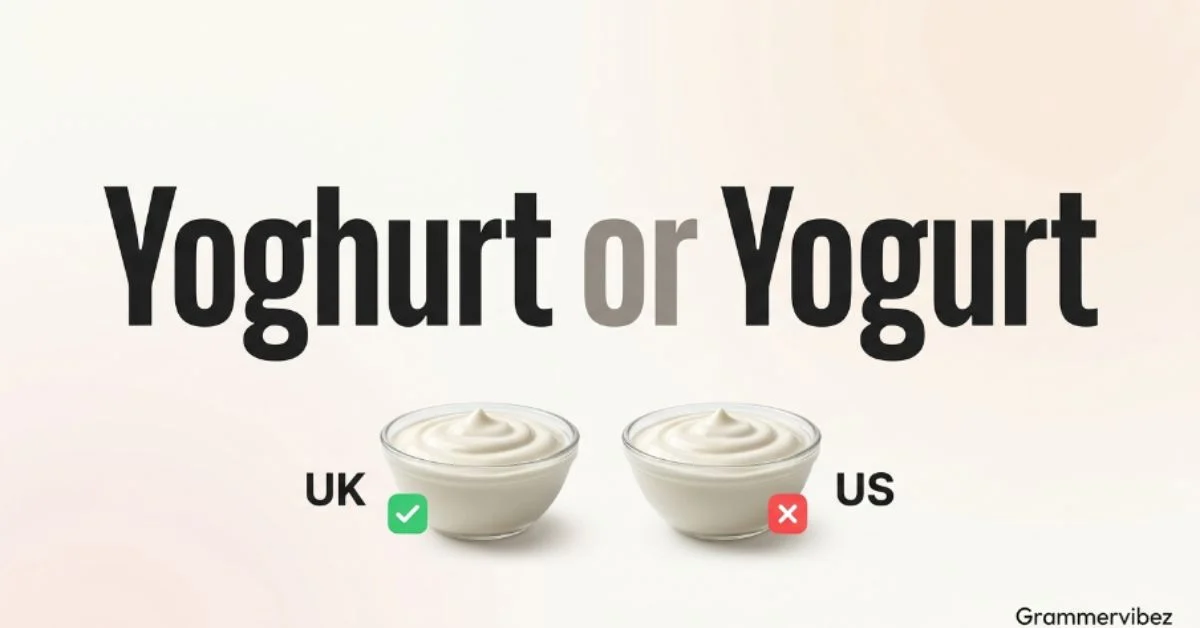
Over time, English changed the spelling based on region. Today, United States prefers “yogurt,” while United Kingdom uses “yoghurt.”
This guide will clear your confusion, show correct usage, and help you choose the best spelling for your audience.
Quick Answer
Both “yoghurt” and “yogurt” are correct.
- Yogurt → American English
- Yoghurt → British English
Examples:
- US: I eat yogurt every morning.
- UK: I eat yoghurt every morning.
The Origin of Yoghurt or Yogurt
The word comes from Turkish yoğurt, from Turkey. It entered English many years ago. At first, spellings were not fixed. Writers used different forms like yoghurt, yogurt, and even yoghourt.
Dictionaries such as Oxford English Dictionary and Merriam-Webster later standardized usage. British English kept “yoghurt”, while American English simplified it to “yogurt.”
British English vs American English Spelling
| Feature | British English | American English |
|---|---|---|
| Spelling | yoghurt | yogurt |
| Usage Region | UK, Commonwealth | US |
| Style | Traditional | Simplified |
Examples:
- UK: She bought strawberry yoghurt.
- US: She bought strawberry yogurt.
Which Spelling Should You Use?
Choose based on your audience:
- Writing for United States → Use yogurt
- Writing for United Kingdom or Commonwealth → Use yoghurt
- Global or SEO content → Use yogurt (more searched)
Tip: Stay consistent. Do not mix both in one article.
Common Mistakes with Yoghurt or Yogurt
Mixing both spellings in one sentence
Pick one style and stay consistent
Thinking one is wrong
Both are correct
Using random variations like “yoghourt”
Use standard forms only
Yoghurt or Yogurt in Everyday Examples
Email:
- Please buy some yogurt for breakfast.
Social Media:
- I love fresh yoghurt with fruit!
News Style:
- Yogurt sales increased this year.
Formal Writing:
- Yogurt contains beneficial bacteria.
Yoghurt or Yogurt – Google Trends & Usage Data
Search data shows:
- “Yogurt” is more popular worldwide
- “Yoghurt” is common in the UK and nearby regions
This means “yogurt” is better for SEO traffic, especially for global audiences.
Comparison Table
| Variation | Correct? | Region | Usage |
|---|---|---|---|
| yogurt | ✅ Yes | US, global | Most common |
| yoghurt | ✅ Yes | UK, Commonwealth | Regional |
| yoghourt | ❌ No | Rare | Outdated |
FAQs
1. Is yoghurt wrong spelling?
No, it is correct in British English.
2. Why are there two spellings?
Because of regional differences in English.
3. Which spelling is more popular?
“Yogurt” is more popular globally.
4. Is yogurt American or British?
“Yogurt” is American English.
5. Can I use both in one article?
No, use one style only.
6. What do dictionaries say?
Both spellings are accepted by Merriam-Webster and Oxford English Dictionary.
7. Which is better for SEO?
“Yogurt” is better for global SEO.
Conclusion
The confusion between yoghurt or yogurt is simple to solve once you understand regional spelling rules. Both words mean the same thing.
The only difference is where they are used. American English prefers “yogurt,” while British English uses “yoghurt.” Neither is wrong, so your choice depends on your audience.
If you write for a global audience or want better SEO results, “yogurt” is the safer option. It has higher search volume and wider recognition.
However, if your audience is in the UK or Commonwealth countries, “yoghurt” is the better choice.
The key rule is consistency. Pick one spelling and use it throughout your content. This keeps your writing clear, professional, and easy to read.
Now you can confidently use the correct spelling in any situation.

John E. Warriner shares clear and practical grammar insights at GrammarVibez.com, helping readers understand confusing words and spelling differences with ease and confidence.