Last Updated on April 25, 2026 by ramzancloudeserver@gmail.com
At first glance, “wonder” and “wander” seem almost identical. Just one extra letter changes the word. But that small difference completely changes the meaning.
This is why many English learners and even native speakers mix them up. You may see sentences where the wrong word is used. Sometimes it still makes sense. But often, it creates confusion.
Both words are very common in daily English. You will see them in conversations, books, social media, and professional writing. One word is about thinking. The other is about movement.
If you choose the wrong one, your sentence can sound strange or unclear. That’s why understanding the difference is important.
In this guide, you will learn:
- The exact meaning of each word
- The key differences
- When to use each one
- Real-life examples
- Common mistakes to avoid
Let’s break it down in a simple way.
Quick Answer
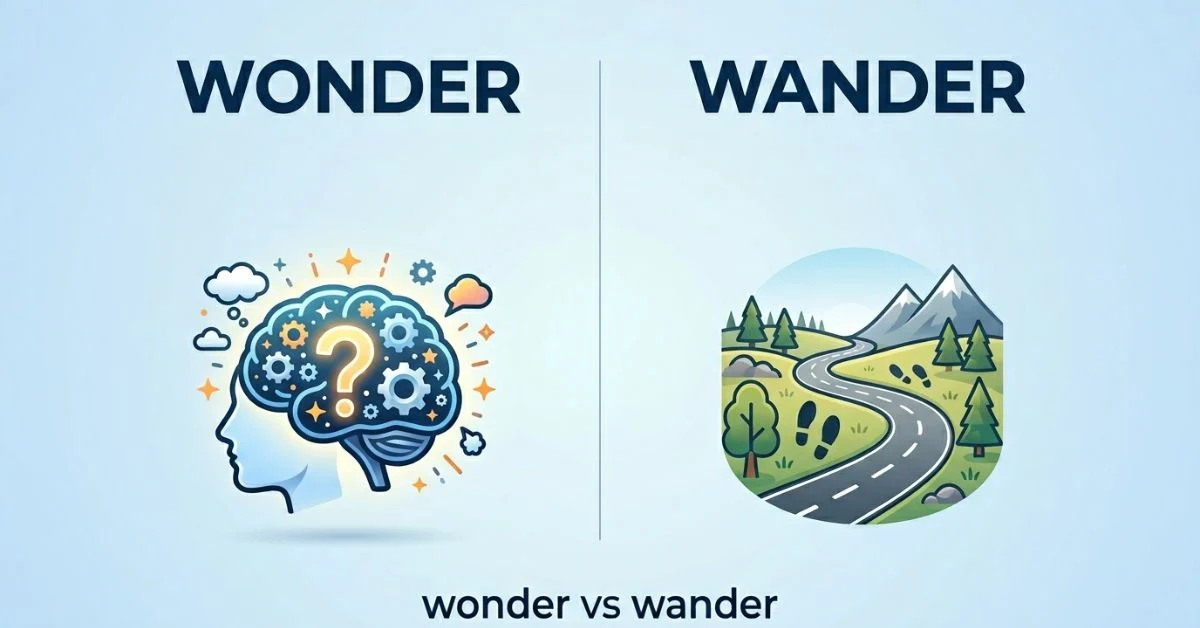
👉 Wonder = to think, feel curious, or feel amazed
👉 Wander = to move around without a clear direction
Examples:
- ✔️ I wonder what will happen next
- ✔️ He likes to wander in the park
👉 Simple rule:
Wonder = mind
Wander = movement
The Origin of Wonder or Wander
Both words come from Old English, but they developed different meanings over time.
- Wonder comes from a word meaning marvel or curiosity
- Wander comes from a word meaning to roam or travel
Why they look similar:
- Both share similar roots in early English
- Pronunciation is close
- Only one letter difference (a vs o)
👉 But their meanings stayed very different
British English vs American English Spelling
There is no difference between British and American English here.
👉 Both use:
- Wonder
- Wander
Comparison Table
| Feature | Wonder | Wander |
|---|---|---|
| Meaning | Thinking / curiosity | Movement / roaming |
| Used in UK | Yes | Yes |
| Used in USA | Yes | Yes |
| Word type | Verb / noun | Verb |
| Formal writing | Yes | Yes |
👉 The rule is the same worldwide
Which Spelling Should You Use?
It depends on what you want to say.
✔️ Use Wonder when:
- You are thinking
- You feel curious
- You feel amazed
Example:
- I wonder why she is late
✔️ Use Wander when:
- You move without a plan
- You walk aimlessly
Example:
- They wander around the city
Easy Trick:
👉 Wonder = Think
👉 Wander = Walk
Common Mistakes with Wonder or Wander
Here are common errors:
❌ Mistake 1: Mixing meanings
❌ I wander what he means
✔️ I wonder what he means
❌ Mistake 2: Using wonder for movement
❌ We wonder in the streets
✔️ We wander in the streets
❌ Mistake 3: Spelling confusion
- People often type fast and mix them
👉 Always check your sentence meaning
Wonder or Wander in Everyday Examples
📧 Email:
- I wonder if you received my message
🏢 Business:
- Customers may wander through the store
📱 Social Media:
- I wonder what people think about this
🌍 Travel:
- Tourists love to wander in new places
👉 Notice:
- Thinking → wonder
- Movement → wander
Wonder or Wander – Google Trends & Usage Data
- Both words are widely used in:
- USA
- UK
- Pakistan
- India
- Wonder:
- More common in daily speech
- Used in questions and thoughts
- Wander:
- Used in travel and storytelling
Insight:
👉 Both are common but used in different contexts
Key Differences Between Wonder and Wander
| Feature | Wonder | Wander |
|---|---|---|
| Type | Mental action | Physical action |
| Meaning | Curiosity or thinking | Moving without direction |
| Example | I wonder why | I wander around |
| Usage | Thoughts, questions | Travel, movement |
Comparison Table (All Variations)
| Word | Meaning | Usage | Example |
|---|---|---|---|
| Wonder | Think or feel curious | Questions, thoughts | I wonder why |
| Wander | Move without direction | Travel, walking | They wander freely |
| Wonder (noun) | Feeling of amazement | Emotions | A sense of wonder |
| Wandering | Continuous movement | Description | Wandering through streets |
FAQs
1. What is the difference between wonder and wander?
Wonder is about thinking. Wander is about moving.
2. Which one is correct: wonder or wander?
Both are correct, but used in different contexts.
3. How do I remember the difference?
👉 Wonder = mind
👉 Wander = movement
4. Can I use wander in a sentence?
Yes. Example: They wander in the forest.
5. Is wonder a noun or verb?
It can be both.
6. Is wander used in formal writing?
Yes, especially in storytelling.
7. Why are these words confusing?
Because they look and sound very similar.
Conclusion
The difference between wonder and wander is simple once you understand their meaning.
👉 Wonder is about thinking, curiosity, and imagination
👉 Wander is about movement, walking, and exploring
Even though the words look almost the same, they describe completely different actions. This is why using the correct one is important for clear communication.
These words are used in daily life, from casual conversations to professional writing. So learning the difference will help you avoid common mistakes.
To keep it simple:
👉 Wonder = think
👉 Wander = walk
With this easy rule, you can confidently use both words correctly in any situation.

Lindley Murray brings classic grammar knowledge to GrammarVibez.com, guiding readers through tricky word choices and spelling rules with simple and timeless explanations.