Last Updated on April 28, 2026 by ramzancloudeserver@gmail.com
Have you ever paused while writing and wondered: should it be “vapour” or “vapor”?
You’re not alone. This small spelling difference confuses many people. You might see one version in a science book and another on a website. Both look correct, and that makes the choice harder.
The confusion comes from two major forms of English: British and American. Each follows its own spelling style. The meaning stays the same, but the letters change.
This word is common in science, weather, and daily life. We use it when talking about steam, air moisture, or gases.
So using the right spelling matters, especially in blogs, academic work, and professional writing.
In this guide, you will learn:
- The correct spelling in different regions
- The meaning and scientific use
- Real examples in everyday writing
- Common mistakes to avoid
Let’s make it clear and easy.
Quick Answer
👉 Both “vapour” and “vapor” are correct
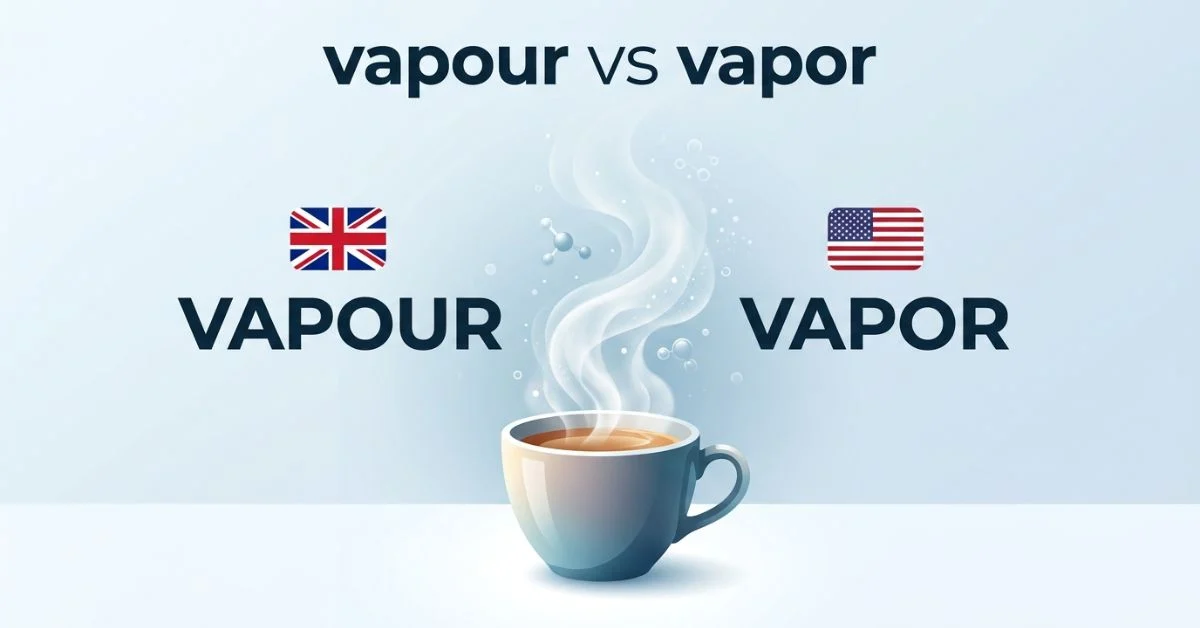
- Vapour → British English
- Vapor → American English
👉 They have the same meaning
Examples:
- ✔️ Water vapor rises into the air (US)
- ✔️ Water vapour rises into the air (UK)
👉 Simple rule:
UK = vapour
US = vapor
The Origin of Vapour or Vapor
The word comes from Latin “vapor,” meaning steam or mist.
Over time:
- American English kept the shorter form → vapor
- British English added “u” → vapour
This pattern appears in many words:
- colour / color
- honour / honor
- favour / favor
👉 The meaning stayed the same, only spelling changed
British English vs American English Spelling
This is the main difference.
✔️ British English:
- vapour
- colour
- favour
✔️ American English:
- vapor
- color
- favor
Comparison Table
| Feature | Vapour | Vapor |
|---|---|---|
| English type | British | American |
| Meaning | Same | Same |
| Scientific use | ✔️ Yes | ✔️ Yes |
| Global usage | Medium | High |
| Modern writing | ✔️ Yes | ✔️ Yes |
👉 Both are correct, but context matters
Which Spelling Should You Use?
The best choice depends on your audience.
✔️ Use “vapor” when:
- Writing for global audience
- Writing blogs or online content
- Using American English style
✔️ Use “vapour” when:
- Writing for UK audience
- Following British English rules
👉 If unsure, choose vapor for wider reach
Common Mistakes with Vapour or Vapor
Here are common errors:
❌ Mistake 1: Mixing both spellings
- Don’t use vapour and vapor in the same article
❌ Mistake 2: Thinking one is wrong
- Both are correct
❌ Mistake 3: Confusing with steam
- Vapor is not always the same as steam
👉 Keep spelling consistent
Vapour or Vapor in Everyday Examples
🌦️ Weather:
- Water vapor forms clouds
- Water vapour rises from lakes
🧪 Science:
- Liquid turns into vapor during heating
- Gas particles form vapour in air
📱 Daily Use:
- The air feels full of vapor after rain
👉 The meaning stays the same in all cases
Vapour or Vapor – Scientific Explanation
In science, vapor means a substance in gas form.
Key concept:
Evaporation
- Liquid → heated
- Turns into gas → vapor
Related ideas:
- Condensation (gas → liquid)
- Water cycle
- Humidity
👉 Vapor is part of natural processes
Vapour or Vapor – Google Trends & Usage Data
- Vapor is more popular globally
- Vapour is common in UK and some countries
Regions:
- USA → vapor
- UK → vapour
- Pakistan/India → both used
Insight:
👉 “Vapor” dominates online content
👉 “Vapour” remains region-specific
Related Concepts and Comparisons
Vapor vs Steam:
- Vapor → invisible gas
- Steam → visible mist
Vapor vs Gas:
- Vapor → comes from liquid
- Gas → natural state
👉 These differences matter in science
Comparison Table (All Variations)
| Word | Meaning | Region | Usage |
|---|---|---|---|
| Vapor | Gas from liquid | US | Common |
| Vapour | Gas from liquid | UK | Common |
| Steam | Visible mist | Global | Everyday |
| Gas | Matter state | Global | Scientific |
FAQs
1. Is it vapour or vapor?
Both are correct. It depends on region.
2. Which is American English?
Vapor is American English.
3. Which is British English?
Vapour is British English.
4. Do they have different meanings?
No. The meaning is the same.
5. Which should I use in blogs?
Use vapor for global audience.
6. Is vapor used in science?
Yes. Both forms are used in science.
7. What is water vapor?
It is water in gas form.
Conclusion
The difference between vapour and vapor is simple.
👉 Both words mean the same thing
👉 The only difference is spelling
British English prefers vapour, while American English uses vapor. This pattern is common in many English words.
If you are writing for a global audience, vapor is usually the better choice. If your audience is in the UK, vapour fits perfectly.
The most important rule is consistency. Choose one style and use it throughout your writing.
Understanding this small difference can improve your writing and make it more professional.

Lindley Murray brings classic grammar knowledge to GrammarVibez.com, guiding readers through tricky word choices and spelling rules with simple and timeless explanations.