Last Updated on May 22, 2026 by ramzancloudeserver@gmail.com
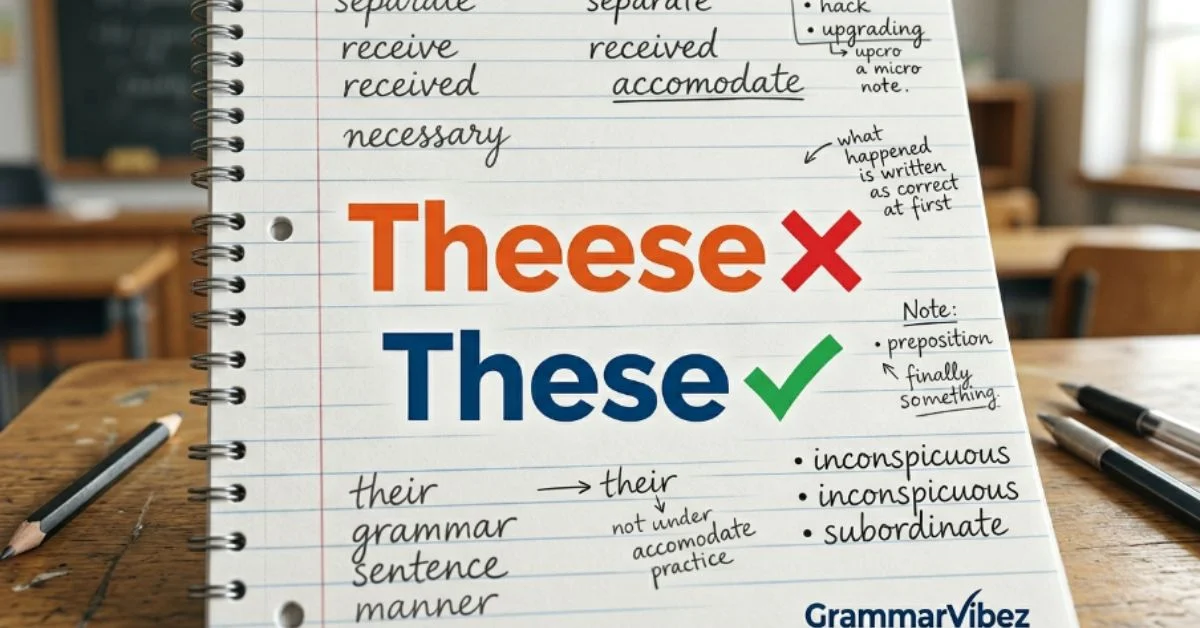
Many English learners get confused between “theese” and “these” because both words sound similar in fast speech. However, only one spelling is correct in standard English grammar.
Small spelling mistakes like this can hurt writing quality, academic work, and online communication.
This guide explains the real difference between theese or these, their meanings, correct usage, grammar rules, examples, and common mistakes.
By the end, you will clearly understand which spelling to use in emails, school writing, social media posts, and professional communication.
Quick Answer
The correct spelling is these.
“Theese” is not a real English word and is considered a spelling mistake.
“These” is the plural form of “this.” It refers to more than one person, object, idea, or thing nearby.
Example:
- These books are helpful.
- These shoes look expensive.
Correct Example
- These cookies taste delicious.
- I bought these pens yesterday.
- These students worked hard.
Incorrect Example
- Theese cookies taste delicious.
- I bought theese pens yesterday.
- Theese students worked hard.
What Does These Mean?
The word “these” is a demonstrative pronoun and determiner in English grammar. It points to multiple things that are close to the speaker.
Common Meanings
| Word | Meaning |
|---|---|
| These | Refers to nearby plural people or things |
| This | Refers to one nearby person or thing |
“These” can describe:
- Objects
- Ideas
- People
- Situations
Simple Usage Examples
- These flowers smell nice.
- These problems need solutions.
- I enjoy these movies.
- These lessons improve grammar skills.
The Origin of These
The word “these” has a long history in the English language. It developed from Old English grammar forms used for plural nouns.
Word History
“These” comes from Old English “þās,” which was used to indicate plural objects nearby. Over time, English spelling became simpler, and the modern form “these” became standard.
Why the Confusion Happens
People often write “theese” because:
- The pronunciation sounds stretched.
- Double vowels confuse learners.
- Many English words use double “e.”
- Typing errors happen quickly.
However, dictionaries and grammar rules only accept “these.”
British English vs American English
There is no spelling difference between British and American English for this word.
Comparison Table
| Language Style | Correct Spelling |
|---|---|
| American English | These |
| British English | These |
| Canadian English | These |
| Australian English | These |
Theese vs Other Variations
Many users search for spelling variations online. Most are incorrect.
Spelling Comparison Table
| Spelling | Correct or Incorrect | Usage | Region |
|---|---|---|---|
| These | Correct | Standard English | Worldwide |
| Theese | Incorrect | Misspelling | None |
| Theses | Correct but different meaning | Academic papers | Worldwide |
| This | Correct singular form | Standard English | Worldwide |
Which Spelling Should You Use?
Always use “these” in proper writing.
US Audience
American English uses “these.”
UK Audience
British English also uses “these.”
International Writing
“These” is the accepted global spelling.
Academic Writing
Schools, universities, and research papers require the correct spelling “these.”
Social Media Usage
Even in casual writing, “these” is still the correct form.
Common Mistakes with These
Many spelling errors happen because of pronunciation confusion.
Frequent Errors
Common incorrect spellings include:
- Theese
- Thees
- Thise
- Theses
Corrected Examples
| Incorrect | Correct |
|---|---|
| Theese cars are fast. | These cars are fast. |
| I like theese shoes. | I like these shoes. |
| Thees books are useful. | These books are useful. |
These in Everyday Examples
The word appears in daily communication everywhere.
Emails
- These files are attached.
- Please review these documents.
Social Media
- These photos look amazing.
- I love these outfits.
News Writing
- These events changed history.
- These policies affect citizens.
School Writing
- These answers are correct.
- These experiments were successful.
Business Writing
- These products increased sales.
- These reports need approval.
Google Trends & Usage Data
Searches for “theese or these” remain popular because English learners often struggle with spelling accuracy.
Popular Countries
People commonly search this keyword in:
- United States
- United Kingdom
- Canada
- Australia
- India
Why People Search This Keyword
Users search because they want to:
- Improve English grammar
- Avoid spelling mistakes
- Write correctly in school and work
- Understand plural demonstratives
- Learn proper English usage
Related Grammar Rules
Understanding similar grammar patterns helps improve writing accuracy.
Similar Spelling Mistakes
Common confusing words include:
- Their or there
- Loose or lose
- Piece or peace
- Then or than
- Receive or recieve
Helpful Grammar Tips
- “This” is singular.
- “These” is plural.
- Never add extra “e” letters.
- Read sentences aloud for clarity.
- Use grammar tools when proofreading.
FAQs
Is theese a real English word?
No, “theese” is not a correct English word.
Which is correct: theese or these?
“These” is the correct spelling.
What type of word is these?
“These” is a demonstrative pronoun and determiner.
Can I use theese in informal writing?
No, it is still incorrect in casual writing.
Why do people spell these as theese?
The mistake happens because of pronunciation confusion and typing habits.
Is these singular or plural?
“These” is plural.
What is the singular form of these?
The singular form is “this.”
Do British and American English spell these differently?
No, both use the spelling “these.”
Conclusion
The correct spelling is always “these.” The word “theese” is a common spelling mistake and should never appear in formal or informal English writing.
“These” refers to multiple nearby people, objects, or ideas and is widely used in emails, business communication, academic work, and social media.
Since pronunciation can confuse learners, many people accidentally add extra letters. Still, standard English grammar only accepts “these.”
To improve writing accuracy, remember that “this” is singular while “these” is plural. Using the correct spelling will make your writing look more professional and trustworthy.

Lindley Murray brings classic grammar knowledge to GrammarVibez.com, guiding readers through tricky word choices and spelling rules with simple and timeless explanations.