Last Updated on June 15, 2026 by ramzancloudeserver@gmail.com
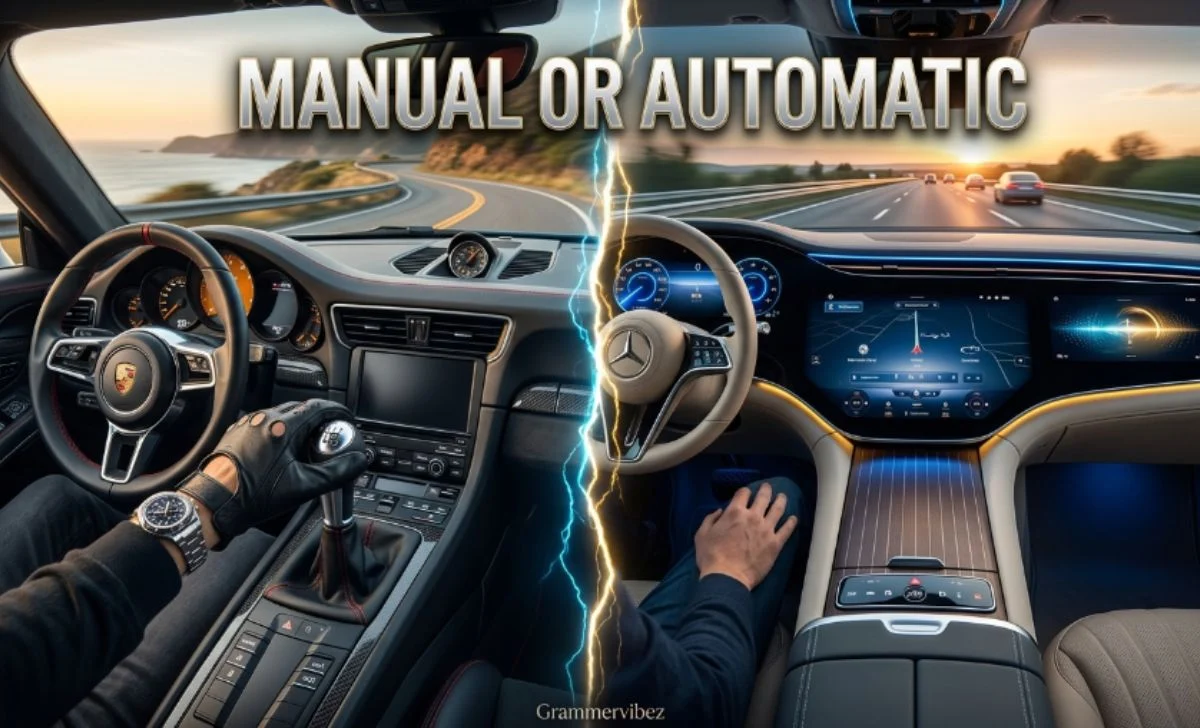
Choosing between manual or automatic transmission is one of the most common decisions car buyers face.
While both options serve the same purpose, transferring power from the engine to the wheels, they offer very different driving experiences.
Some drivers enjoy the control and engagement of a manual transmission, while others prefer the convenience and comfort of an automatic.
Factors such as fuel economy, maintenance costs, driving conditions, and personal preference all play a role in determining which option is best.
In this guide, you’ll learn the differences between manual and automatic transmissions, their advantages and disadvantages, common mistakes buyers make, and how to choose the right one for your needs.
Quick Answer
If you want maximum driving control, lower purchase costs, and a more engaging experience, choose a manual transmission.
If you prefer convenience, easier city driving, and modern technology, choose an automatic transmission.
For most modern drivers, especially those who drive in traffic regularly, automatic cars are usually the better choice.
Meaning and Usage
A manual transmission requires the driver to change gears using a clutch pedal and gear lever.
An automatic transmission changes gears automatically without requiring driver input.
Both systems perform the same function but operate differently.
Manual Transmission
A manual gearbox requires:
- A clutch pedal
- A gear stick
- Driver-controlled gear changes
The driver decides when to shift gears based on speed and engine performance.
Automatic Transmission
An automatic gearbox handles gear changes automatically through systems such as:
- Torque Converter Automatic
- Continuously Variable Transmission (CVT)
- Dual-Clutch Transmission (DCT)
The vehicle selects the appropriate gear without requiring driver intervention.
Comparison Table
| Feature | Manual Transmission | Automatic Transmission |
|---|---|---|
| Ease of Driving | Harder | Easier |
| Learning Curve | Steeper | Beginner-Friendly |
| Traffic Driving | Less Comfortable | More Comfortable |
| Purchase Price | Usually Lower | Usually Higher |
| Maintenance Cost | Often Lower | Often Higher |
| Fuel Economy | Traditionally Better | Often Equal or Better in Modern Cars |
| Driver Control | Excellent | Moderate |
| Driving Enjoyment | High | Moderate |
| Resale Demand | Lower in Many Markets | Higher in Most Markets |
| Hill Driving | Requires Skill | Easier |
American vs British English Table
| American English | British English |
|---|---|
| Stick Shift | Manual Gearbox |
| Automatic Transmission | Automatic Gearbox |
| Gear Shift | Gear Lever |
| Parking Brake | Handbrake |
| Gas Pedal | Accelerator Pedal |
The meaning remains the same, but terminology may vary depending on the region.
Manual Transmission: Advantages and Disadvantages
Advantages
Better Driver Control
Many enthusiasts prefer manual cars because they allow greater control over gear selection and engine performance.
Lower Purchase Cost
Manual vehicles are often less expensive than equivalent automatic models.
Simpler Mechanics
Manual gearboxes typically have fewer complex components, which may reduce repair expenses.
More Engaging Driving Experience
Many drivers enjoy being actively involved in operating the vehicle.
Disadvantages
Difficult in Heavy Traffic
Constant clutch use can become tiring during stop-and-go driving.
Steeper Learning Curve
New drivers often need extra practice to master smooth gear changes.
Less Common
Many manufacturers now focus heavily on automatic models.
Automatic Transmission: Advantages and Disadvantages
Advantages
Easier to Drive
Automatic cars are easier for beginners because they eliminate manual gear shifting.
Better for Traffic
In crowded cities, automatic vehicles provide a more relaxed driving experience.
Advanced Technology
Modern automatic systems often deliver excellent fuel efficiency and smooth acceleration.
Higher Resale Demand
Many buyers prefer automatic vehicles, increasing resale opportunities.
Disadvantages
Higher Initial Cost
Automatic models usually cost more than manual versions.
More Complex Repairs
Advanced transmission systems can be expensive to repair or replace.
Reduced Driver Engagement
Some enthusiasts feel disconnected compared to driving a manual vehicle.
Which Is Better for Fuel Economy?
Years ago, manual transmissions generally provided better fuel economy.
Today, modern automatic transmissions, especially CVTs and advanced multi-speed automatics, often match or exceed manual efficiency.
Fuel economy depends on:
- Driving habits
- Vehicle model
- Road conditions
- Engine type
- Transmission technology
For most new vehicles, the difference is minimal.
Which Is Better for Beginners?
Automatic transmissions are generally better for beginners because:
- No clutch operation is required
- Less risk of stalling
- Easier hill starts
- Simpler traffic navigation
Many driving schools now train students primarily on automatic vehicles.
Which Transmission Lasts Longer?
Both can last for many years with proper maintenance.
Manual transmissions often have:
- Simpler designs
- Fewer electronic components
- Lower repair complexity
Automatic transmissions can also be highly durable when transmission fluid changes are performed according to manufacturer recommendations.
Longevity depends more on maintenance than transmission type.
Common Mistakes
Choosing Based Only on Price
A cheaper purchase price does not always mean lower long-term ownership costs.
Ignoring Daily Driving Conditions
Someone who drives through heavy traffic every day may become frustrated with a manual transmission.
Overlooking Resale Value
Automatic vehicles typically attract more buyers in many markets.
Not Test Driving Both Options
Many buyers choose a transmission without experiencing both firsthand.
Forgetting Maintenance Requirements
Transmission maintenance can significantly impact long-term reliability.
Real-Life Examples
Example 1: City Commuter
Sarah drives through congested urban traffic every day.
An automatic transmission reduces fatigue and makes commuting easier.
Example 2: Driving Enthusiast
James enjoys mountain roads and weekend drives.
A manual transmission provides greater engagement and control.
Example 3: New Driver
Emily recently received her learner’s permit.
An automatic vehicle helps her focus on road awareness instead of gear changes.
Example 4: Budget-Conscious Buyer
Ahmed wants a reliable used vehicle with lower upfront costs.
A manual transmission may offer better value depending on the market.
Helpful Tips
- Choose automatic if convenience is your top priority.
- Choose manual if you enjoy active driving.
- Consider local resale trends before purchasing.
- Test drive both transmission types.
- Check maintenance history when buying used vehicles.
- Learn how modern CVT and DCT systems differ from traditional automatics.
- Think about where you drive most often—city roads or highways.
FAQs
Is manual better than automatic?
Neither is universally better. The right choice depends on your driving style, budget, and preferences.
Are manual cars cheaper?
In many markets, manual vehicles cost less initially, although this varies by model and region.
Which transmission is safer?
Both are safe when operated correctly. Automatic vehicles may reduce driver workload in heavy traffic.
Is manual harder to learn?
Yes. Drivers must learn clutch control, gear shifting, and hill starts.
Do manual cars get better mileage?
Not always. Many modern automatic transmissions now achieve equal or better fuel efficiency.
Why are automatic cars more popular?
They offer convenience, comfort, and ease of use, especially in urban environments.
Are manual cars disappearing?
Many manufacturers are reducing manual options, but manual transmissions remain popular among enthusiasts.
Which is better for long trips?
Both work well, but automatic transmissions often provide greater comfort on extended journeys.
Conclusion
The debate between manual or automatic transmission ultimately comes down to personal preference and driving needs.
Manual cars offer greater control, lower initial costs, and a more engaging experience. Automatic vehicles provide convenience, smoother operation, and better comfort in daily traffic.
For most modern drivers, especially commuters and beginners, automatic transmissions are often the practical choice.
However, driving enthusiasts may still prefer the connection and control that come with a manual gearbox.
Before making a decision, consider your daily driving environment, maintenance budget, long-term ownership goals, and overall comfort level.
A test drive of both options is the best way to determine which transmission fits your lifestyle.

John E. Warriner shares clear and practical grammar insights at GrammarVibez.com, helping readers understand confusing words and spelling differences with ease and confidence.