Last Updated on May 7, 2026 by ramzancloudeserver@gmail.com
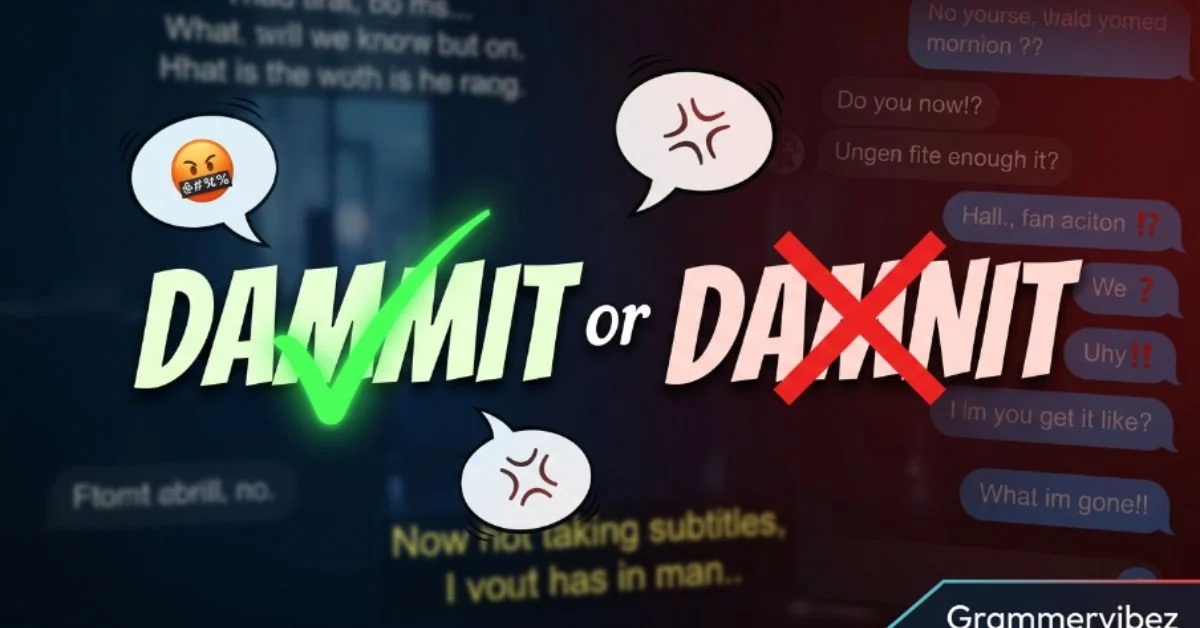
The words “dammit or damnit” are often searched because people hear this expression in movies, TV shows, and everyday conversations but are unsure how to spell it correctly.
Since both versions look similar, writers often get confused when typing it in chats, captions, or informal writing.
This confusion comes from spoken English. The word is said quickly and emotionally, so spelling varies based on how people “hear” it.
Some write “dammit” while others type “damnit,” but only one form is widely accepted.
For example:
- Correct: Oh dammit, I forgot my keys.
- Less common: Oh damnit, I forgot my keys.
Understanding this difference is important for learners because informal expressions still follow spelling conventions in writing. In this guide, you will learn the correct spelling, origin, usage rules, differences in English style, common mistakes, and real-life examples so you can use it confidently.
Quick Answer
The correct and most widely accepted spelling is “dammit.”
Meaning
“Dammit” is an informal expression used to show:
- Frustration
- Anger
- Surprise
Examples
- Dammit, I missed the bus!
- Oh dammit, I forgot my password.
- Dammit, this is hard!
Key Rule
- Dammit = standard informal spelling
- Damnit = incorrect or less accepted variant
The Origin of Dammit or Damnit
The word comes from the phrase “damn it.” Over time, in spoken English, it merged into a single expressive word.
Because people pronounce it quickly, different spellings appeared:
- dammit
- damnit
- damn it (original form)
The most accepted written form today is “dammit.”
This shows how spoken language influences spelling in informal English.
British English vs American English Spelling
There is no official difference between British and American English for this word. Both mainly use “dammit” in informal writing.
| Usage | British English | American English |
|---|---|---|
| Standard informal form | Dammit | Dammit |
| Alternative spelling | Damnit | Damnit |
| Formal writing | Avoid both | Avoid both |
Example (UK)
- Dammit, I lost the file.
Example (US)
- Dammit, this game is intense.
Which Spelling Should You Use?
Use “Dammit” when:
- Writing dialogues
- Social media posts
- Informal chatting
- Movie scripts
- Casual storytelling
Avoid using it in:
- Academic writing
- Business emails
- Formal documents
Best Advice:
👉 Use “dammit” for natural, modern informal English.
Common Mistakes with Dammit or Damnit
Mistake #1
❌ Damnit, I forgot it
✅ Dammit, I forgot it
Mistake #2
❌ Oh damnit!
✅ Oh dammit!
Mistake #3
❌ I said damnit loudly
✅ I said dammit loudly
Easy Rule
- Spoken emotion = “dammit”
- “Damnit” is outdated and less standard
Dammit or Damnit in Everyday Examples
Movies
- Dammit, we’re running out of time!
Social Media
- Dammit, I missed the sale 😭
Text Messages
- Dammit, I forgot your birthday!
Gaming
- Dammit! I lost again!
Story Writing
- He shouted, “Dammit, this isn’t fair!”
Dammit or Damnit – Google Trends & Usage Data
Search trends show that “dammit” is more widely used than “damnit.”
Popular searches:
- dammit meaning
- dammit or damnit
- how to spell dammit
- damnit vs dammit
Countries with high searches:
- United States
- United Kingdom
- Canada
- Australia
- India
- Pakistan
Most users search this term for spelling correction and slang understanding.
Comparison Table: Dammit vs Damnit
| Word | Status | Usage | Example |
|---|---|---|---|
| Dammit | Correct informal | Common in writing | Oh dammit! |
| Damnit | Less accepted | Rare variant | Not preferred |
| Damn it | Original form | Formal breakdown | Damn it, I forgot |
FAQs
Is “dammit” a real word?
Yes, it is an informal exclamation used in spoken and casual writing.
Is “damnit” correct?
It is less accepted and considered incorrect in standard writing.
What does dammit mean?
It expresses frustration, anger, or surprise.
Can I use dammit in formal writing?
No, it should only be used in informal contexts.
Why do people write damnit?
Because of pronunciation confusion and spelling assumptions.
Which spelling is most common?
“Dammit” is the most widely used form.
Is dammit rude?
It is mild slang, less offensive than stronger curse words.
Conclusion
The confusion between “dammit or damnit” comes from spoken English and informal usage. However, the correct and widely accepted spelling is “dammit.”
It is the standard form used in movies, social media, casual writing, and everyday communication.
The variant “damnit” appears sometimes, but it is not preferred in modern English.
Understanding this small difference helps improve your writing accuracy and makes your informal English look more natural.
While both forms come from the phrase “damn it,” language evolution has made “dammit” the dominant version. It is short, expressive, and widely recognized in global English usage.
If you want clear, correct informal writing, always choose dammit. It ensures better readability, proper tone, and avoids common spelling mistakes in casual communication.

John E. Warriner shares clear and practical grammar insights at GrammarVibez.com, helping readers understand confusing words and spelling differences with ease and confidence.