Last Updated on May 17, 2026 by ramzancloudeserver@gmail.com
Many people see the option “credit or debit” while shopping online or paying in stores. This simple question often creates confusion, especially for new bank users.
Some people think credit and debit cards work the same way, while others are unsure which option is safer or better.
The truth is that both payment methods are useful, but they work differently. A debit card uses money directly from your bank account.
A credit card lets you borrow money from a bank and pay it back later. Knowing the difference helps you avoid fees, manage spending, and choose the right payment method.
In this guide, you will learn the meaning of credit and debit, how they work, common mistakes people make, and which option is best for different situations.
The article also explains usage trends, examples, and important banking terms in simple language.
Quick Answer
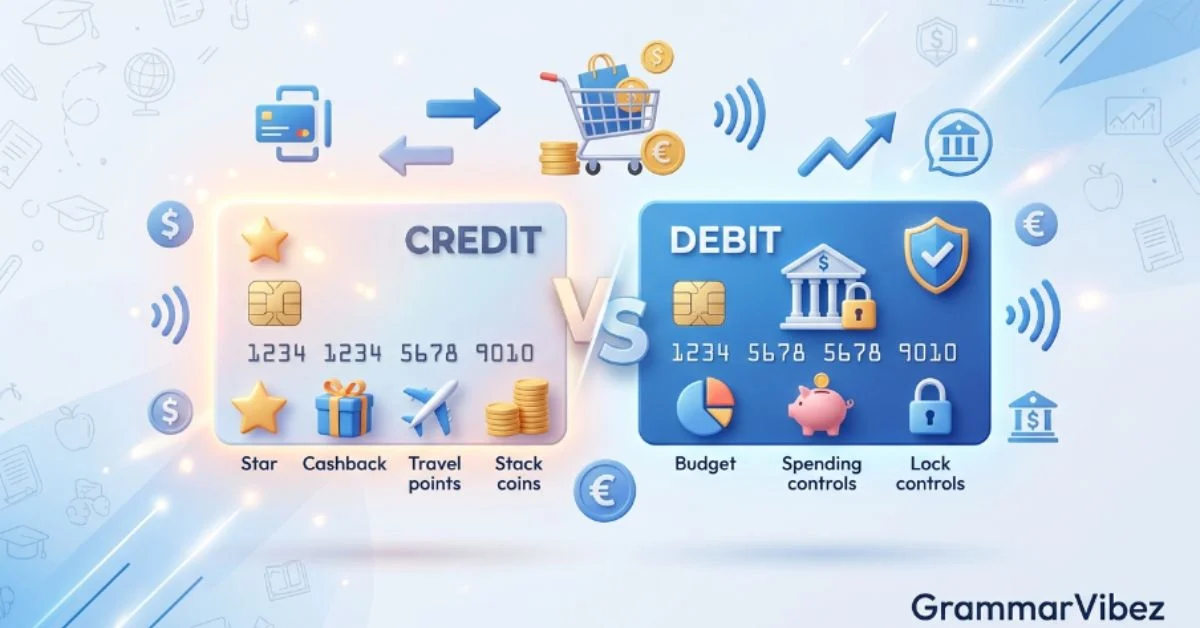
The main difference between credit and debit is where the money comes from.
- Debit → Uses money from your bank account immediately
- Credit → Uses borrowed money that you repay later
Examples
- Debit: Buying groceries using money from your checking account
- Credit: Booking a flight using a credit card and paying the bill later
| Feature | Credit | Debit |
|---|---|---|
| Money Source | Borrowed money | Bank account money |
| Monthly Bill | Yes | No |
| Interest Charges | Possible | No |
| Builds Credit Score | Yes | Usually No |
The Origin of Credit or Debit
The words “credit” and “debit” come from Latin.
- Credit comes from the Latin word credere, meaning “to trust” or “to believe.”
- Debit comes from the Latin word debere, meaning “to owe.”
Banks and accounting systems have used these terms for hundreds of years. Over time, they became common in modern banking and digital payments.
Today, companies like Visa and Mastercard use these systems worldwide for online shopping, ATM withdrawals, and contactless payments.
Unlike spelling debates such as “color” vs “colour,” the words “credit” and “debit” have the same spelling in both British and American English.
British English vs American English Spelling
The spelling of “credit” and “debit” stays the same in both British and American English. However, payment habits and banking terms can differ slightly between regions.
Comparison Table
| Region | Preferred Terms | Notes |
|---|---|---|
| United States | Credit card, debit card | Very common in daily use |
| United Kingdom | Credit card, debit card | Same spelling used |
| Australia | EFTPOS, debit card | Debit payments more common |
| Canada | Credit and debit | Similar to US usage |
Examples
| Region | Example Sentence |
|---|---|
| US | “Should I pay with credit or debit?” |
| UK | “Most shops accept debit cards.” |
| Australia | “Debit is common for small purchases.” |
Which Spelling Should You Use?
Since “credit” and “debit” are not spelling variations, you should choose the word based on the payment method you mean.
Use “Debit” When:
- Paying from your bank account
- Avoiding debt
- Managing daily spending
- Withdrawing cash
Use “Credit” When:
- Building a credit score
- Making large purchases
- Earning rewards points
- Paying later
Audience-Based Advice
| Audience | Better Option |
|---|---|
| Students | Debit |
| Frequent travelers | Credit |
| Online shoppers | Credit |
| Budget-focused users | Debit |
Common Mistakes with Credit or Debit
People often confuse these banking terms because cards look similar.
Common Errors
| Incorrect Idea | Correct Information |
|---|---|
| Credit and debit are the same | They work differently |
| Debit builds credit score | Usually it does not |
| Credit means free money | It must be repaid |
| Debit cards charge interest | They usually do not |
Common Payment Confusion
Some payment machines ask “credit or debit” even when using a debit card. This often changes how the payment is processed, not the type of card.
Credit or Debit in Everyday Examples
Here are common examples of how people use these terms.
Email Example
“Please confirm whether payment was made using credit or debit.”
News Example
“Digital credit and debit transactions continue to grow worldwide.”
Social Media Example
“I always use debit to avoid overspending.”
Formal Writing Example
“The customer may choose either credit or debit at checkout.”
Shopping Example
“Would you like to pay with credit or debit today?”
Credit or Debit – Google Trends & Usage Data
Searches for “credit or debit” stay popular because millions of people use cards daily. Interest is especially high in countries with strong digital banking systems.
Popular Countries
- United States
- United Kingdom
- Canada
- Australia
Usage Trends
| Keyword | Popularity |
|---|---|
| Credit card | Very High |
| Debit card | Very High |
| Credit or debit | High |
Online shopping and contactless payments continue increasing the use of both methods.
Credit vs Debit Comparison Table
| Feature | Credit | Debit |
|---|---|---|
| Linked to bank account | No | Yes |
| Borrowed money | Yes | No |
| Interest fees | Possible | Rare |
| Rewards programs | Common | Limited |
| Risk of debt | Higher | Lower |
| Builds credit history | Yes | No |
FAQs
What is the difference between credit and debit?
Credit uses borrowed money, while debit uses money from your bank account.
Is debit safer than credit?
Both are safe, but credit cards often offer stronger fraud protection.
Can debit cards build credit?
Usually no, unless connected to special banking programs.
Which is better for online shopping?
Many people prefer credit because of buyer protection benefits.
Do debit cards charge interest?
No. Debit cards use your own money.
Why do stores ask “credit or debit”?
The question helps decide how the payment will be processed.
Should students use credit or debit?
Debit cards are often easier for budgeting and avoiding debt.
Conclusion
The choice between credit or debit depends on your financial needs and spending habits.
Debit cards are useful for controlling spending because they use money directly from your bank account.
Credit cards offer rewards, fraud protection, and credit-building benefits, but they can also lead to debt if not managed carefully.
Both payment methods are common worldwide, and companies like Visa and Mastercard support them across stores, websites, and mobile payments.
Understanding how each option works helps you make smarter financial decisions.
If you want better budgeting, debit may be the best choice. If you want rewards and stronger purchase protection, credit may work better.
Choosing the right option depends on your goals, habits, and comfort with managing money responsibly.

Lindley Murray brings classic grammar knowledge to GrammarVibez.com, guiding readers through tricky word choices and spelling rules with simple and timeless explanations.