Last Updated on April 22, 2026 by ramzancloudeserver@gmail.com
Do you get confused between “apposed” and “opposed”?
You are not alone. These two words look very similar. But their meanings are different. Many people mix them up in writing, emails, and even exams.
The confusion happens because both words have almost the same spelling. Only one letter changes. But that small change creates a big difference in meaning.
If you use the wrong word, your sentence can sound incorrect or confusing. This is important in formal writing and professional communication.
In this guide, you will learn:
- The correct meaning of both words
- The key differences
- When to use each one
- Common mistakes to avoid
Let’s make it simple.
Quick Answer
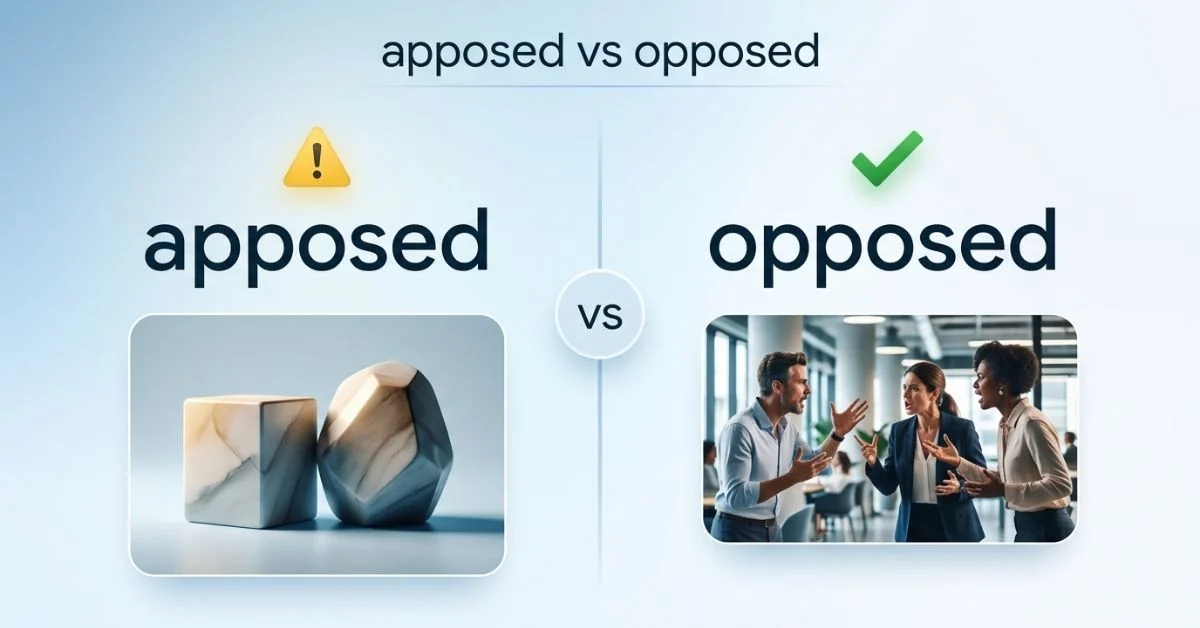
✅ “Opposed” is the correct and commonly used word
⚠️ “Apposed” is rare and used in technical contexts
👉 Use opposed when you mean “against something”
👉 Use apposed when you mean “placed next to something”
Examples:
- ✔️ She is strongly opposed to the idea
- ✔️ The two bones are apposed together
The Origin of Apposed vs Opposed
Both words come from Latin roots.
- Opposed comes from opponere → “to set against”
- Apposed comes from apponere → “to place near”
Why they look similar:
- Both share the root word “pose” (to place)
- Different prefixes change the meaning:
- op- = against
- ap- = near
👉 So:
- opposed = placed against
- apposed = placed next to
British English vs American English Spelling
There is no spelling difference here.
👉 Both British English and American English use:
- opposed
- apposed
Comparison Table
| Feature | Opposed | Apposed |
|---|---|---|
| Meaning | Against | Placed next to |
| Common usage | Yes | Rare |
| Used in UK | Yes | Yes |
| Used in USA | Yes | Yes |
| Formal writing | Yes | Limited |
👉 The difference is about usage, not spelling style.
Which Spelling Should You Use?
It depends on your meaning.
✔️ Use Opposed when:
- You disagree with something
- You are against an idea or action
Examples:
- I am opposed to this plan
- They are strongly opposed to change
✔️ Use Apposed when:
- You mean “placed next to”
- In technical or medical context
Examples:
- The tissues are apposed
- The surfaces are closely apposed
Simple Rule:
👉 Opposed = against
👉 Apposed = next to
Common Mistakes with Apposed or Opposed
Here are common errors:
❌ Mistake 1: Using “apposed” instead of “opposed”
❌ I am apposed to this idea
✔️ I am opposed to this idea
Mistake 2: Thinking both words mean the same
✔️ They have completely different meanings
❌ Mistake 3: Using “apposed” in general writing
👉 It is mostly used in medical or technical fields
Apposed or Opposed in Everyday Examples
📧 Email:
- I am opposed to the proposal
🏢 Business:
- The board is opposed to the decision
📰 News:
- Citizens are strongly opposed to the policy
🧪 Technical / Medical:
- The edges of the wound are apposed
👉 In daily use, “opposed” is far more common
Apposed or Opposed – Google Trends & Usage Data
- “Opposed” is widely used worldwide:
- USA
- UK
- Pakistan
- India
- “Apposed”:
- Very rare
- Mostly used in medical or scientific writing
Insight:
👉 “Opposed” dominates search and usage
👉 “Apposed” is niche and technical
Comparison Table (All Variations)
| Word | Type | Meaning | Usage |
|---|---|---|---|
| Oppose | Verb | To disagree | Common |
| Opposed | Adjective/Verb | Against | Very common |
| Opposing | Verb form | Disagreeing | Common |
| Appose | Verb | Place next to | Rare |
| Apposed | Adjective/Verb | Placed near | Technical |
FAQs
1. Is it apposed or opposed?
Use opposed in most cases.
2. Is apposed a real word?
Yes, but it is rare and used in technical fields.
3. What does opposed mean?
It means “against something.”
4. What does apposed mean?
It means “placed next to something.”
5. Can I use apposed in normal writing?
No. It is not common in everyday English.
6. Which word is more common?
Opposed is much more common.
7. How do I remember the difference?
Opposed = against
Apposed = near
Conclusion
The difference between apposed and opposed is simple once you understand their meanings.
👉 Opposed means “against” and is used in everyday English
👉 Apposed means “placed next to” and is mostly used in technical contexts
Even though the words look similar, they are not interchangeable. Using the wrong one can change the meaning of your sentence.
In most situations, emails, business writing, or daily conversation, you should use opposed. It is clear, correct, and widely understood.
Apposed, on the other hand, is rare and mainly used in medical or scientific language.
So remember:
👉 Use opposed for general communication
👉 Use apposed only when talking about position or placement
This simple rule will help you avoid mistakes and write with confidence.

John E. Warriner shares clear and practical grammar insights at GrammarVibez.com, helping readers understand confusing words and spelling differences with ease and confidence.