Last Updated on April 23, 2026 by ramzancloudeserver@gmail.com
Do you ever pause while writing and think: should it be “better than” or “better then”?
This is one of the most common grammar mistakes in English. The two words look similar. They sound close. But their meanings are very different.
Many people mix them up in emails, social media, and even professional writing. This happens because both words are small and easy to confuse.
But using the wrong one can change the meaning of your sentence. It can also make your writing look less clear.
In this guide, you will learn:
- The correct phrase
- The difference between than and then
- Simple rules to remember
- Real-life examples
- Common mistakes to avoid
Let’s clear it up in a simple way.
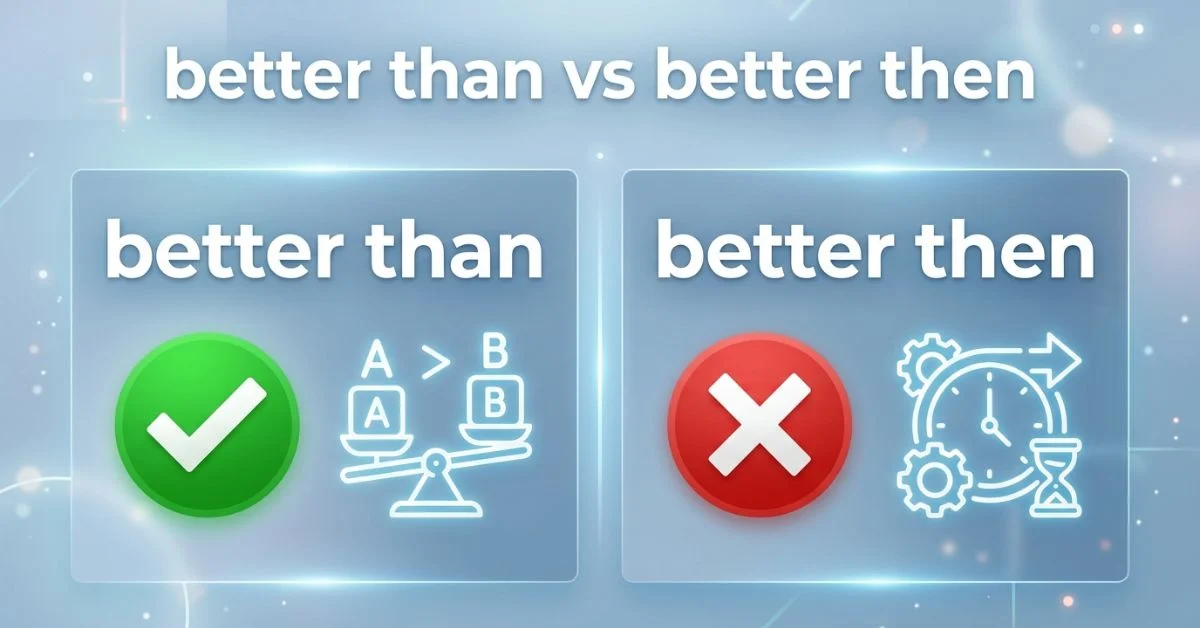
Quick Answer
✅ “Better than” is correct
❌ “Better then” is incorrect (in most cases)
👉 Use than for comparison
👉 Use then for time or sequence
Examples:
- ✔️ This phone is better than the old one
- ✔️ She is better at math than me
👉 Simple rule:
Comparison = than
Time = then
The Origin of Better Than or Better Then
Both words come from Old English, but they developed different meanings.
- Than → used for comparison
- Then → used for time and order
Over time, English kept both words. But each one has its own role.
That’s why:
- “Better than” compares two things
- “Then” talks about what happens next
British English vs American English Spelling
There is no difference here.
👉 Both British English and American English use:
- better than (correct)
- not “better then” for comparison
Comparison Table
| Feature | Better Than | Better Then |
|---|---|---|
| Correct usage | ✔️ Yes | ❌ No |
| Used in UK | ✔️ Yes | ❌ No |
| Used in USA | ✔️ Yes | ❌ No |
| Grammar role | Comparison | Time word |
| Formal writing | ✔️ Yes | ❌ No |
👉 The rule is the same worldwide
Which Spelling Should You Use?
The answer is simple.
👉 Always use better than when comparing
Use it in:
- Emails
- Essays
- Blogs
- Daily conversation
When is “then” correct?
Only when talking about time:
- First finish your work, then relax
👉 But never use “then” in comparison
Common Mistakes with Better Than or Better Then
Here are common errors:
❌ Mistake 1: Using “then” for comparison
❌ She is better then me
✔️ She is better than me
❌ Mistake 2: Mixing meanings
- Than = comparison
- Then = time
👉 Keep them separate
❌ Mistake 3: Typing errors
People often type fast and write “then” by mistake
👉 Always double-check your sentence
Better Than or Better Then in Everyday Examples
📧 Email:
- This plan is better than the previous one
🏢 Business:
- Our service is better than competitors
📱 Social Media:
- This movie is better than I expected
⏱️ Time Example (then):
- Finish your task, then take a break
👉 Notice:
- Comparison → than
- Sequence → then
Better Than or Better Then – Google Trends & Usage Data
- “Better than” is widely used:
- USA
- UK
- Pakistan
- India
- “Better then”:
- Mostly appears as a mistake
- Very low correct usage
Insight:
👉 “Better than” dominates search and writing
👉 “Better then” is usually incorrect
Comparison Table (All Variations)
| Word | Meaning | Usage | Example |
|---|---|---|---|
| Than | Comparison word | Comparing things | Better than before |
| Then | Time/order word | Sequence | Finish work, then rest |
| Better than | Correct phrase | Comparison | Better than others |
| Better then | Incorrect phrase | ❌ Avoid | ❌ Not correct |
FAQs
1. Is it better than or better then?
Use better than. It is correct.
2. Why is better then wrong?
Because “then” is used for time, not comparison.
3. When should I use then?
Use it for sequence or time.
4. How do I remember the difference?
👉 Than = comparison
👉 Then = time
5. Can better then ever be correct?
Only in rare cases where “then” refers to time, not comparison.
6. Is this rule the same in UK and US English?
Yes. The rule is the same.
7. What is a simple example?
This car is better than that one.
Conclusion
The difference between better than and better then is simple but important.
👉 “Better than” is the correct phrase for comparison
👉 “Then” is only used for time or sequence
Many people make this mistake because the words look similar. But once you understand their roles, it becomes easy to choose the right one.
This rule applies everywhere—emails, social media, business writing, and daily conversation.
To avoid mistakes, remember this simple tip:
👉 Than = compare
👉 Then = time
Using the correct form will make your writing clear, professional, and easy to understand.

John E. Warriner shares clear and practical grammar insights at GrammarVibez.com, helping readers understand confusing words and spelling differences with ease and confidence.