I once wrote a sentence—“Me and my friend went to the market”—and something felt off. Should it be me or I?
If you’ve ever had this confusion, you’re not alone. This is one of the most common grammar questions in English.
People search for me or I because both words refer to themselves, but using the wrong one can make a sentence sound incorrect. It often happens in everyday speaking, emails, and even professional writing.
The confusion comes from grammar rules about subjects and objects.
But don’t worry, this guide will make it simple. You’ll learn when to use me and when to use I, with easy examples and tips.
By the end, you’ll feel confident choosing the correct word every time.
Quick Answer
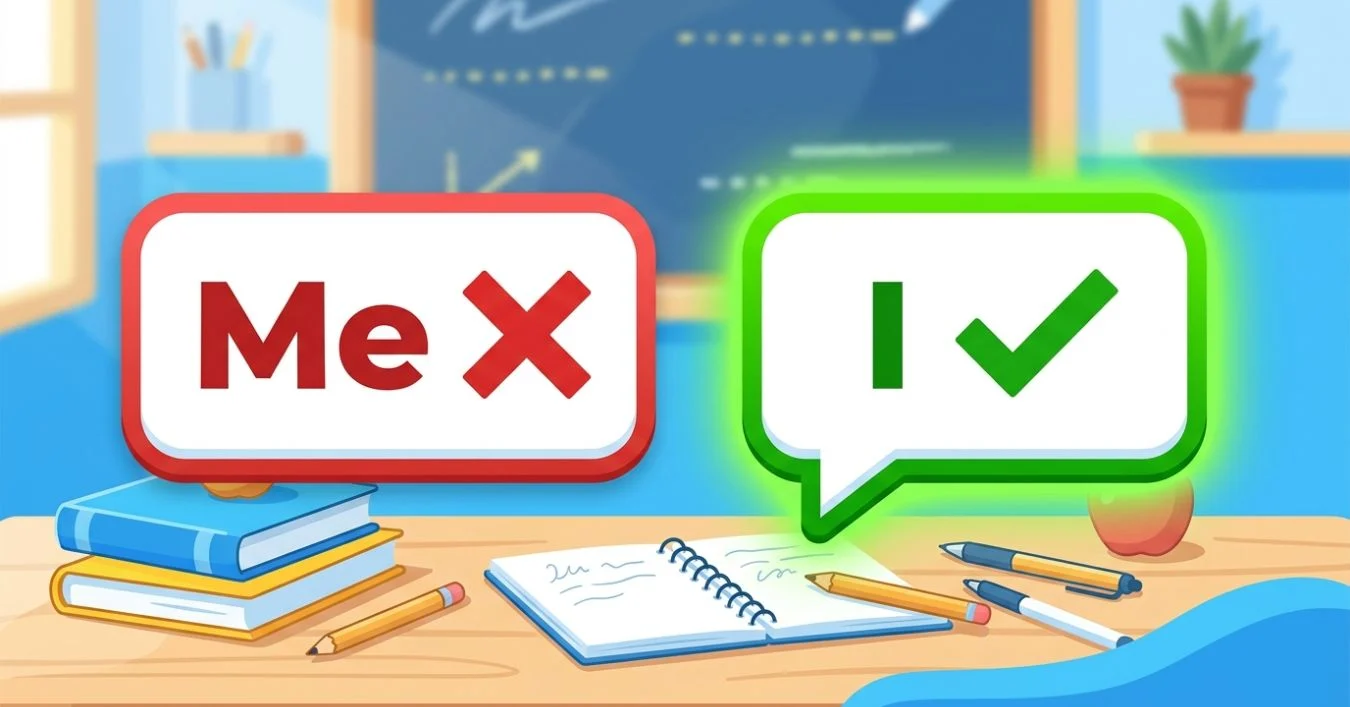
Use I as the subject (the person doing the action).
Use me as the object (the person receiving the action).
👉 Examples:
- “I went to the store.” ✔ (subject)
- “She called me.” ✔ (object)
✔ I = doer
✔ Me = receiver
The Origin of Me or I
Both “I” and “me” come from Old English.
- “I” was used as the subject form
- “Me” was used as the object form
English has kept this rule for hundreds of years. The difference exists to make sentences clear—so we know who is doing the action and who is affected by it.
British English vs American English Spelling
There is no spelling difference between British and American English for me or I.
| Feature | I | Me |
|---|---|---|
| British English | ✔ Same usage | ✔ Same usage |
| American English | ✔ Same usage | ✔ Same usage |
| Grammar Role | Subject | Object |
✔ The rule is the same worldwide.
Which Spelling Should You Use?
Choose based on sentence role:
- Use I when you are doing the action
- Use me when something is done to you
👉 Easy trick: Remove the other person
- “Me and Ali went…” ❌
- Remove “Ali” → “Me went…” ❌
✔ Correct: “I went…”
✔ Simple rule:
If it sounds wrong alone, it’s wrong in the sentence.
Common Mistakes with Me or I
❌ “Me and my friend went to school.”
✔ “My friend and I went to school.”
❌ “She gave it to my friend and I.”
✔ “She gave it to my friend and me.”
Using “I” to sound more formal
Grammar matters more than sounding formal
👉 Tip:
Don’t overthink—just test the sentence without the second person.
Me or I in Everyday Examples
Emails:
- “I would like to apply for the job.”
- “Please contact me for details.”
Social Media:
- “My brother and I are traveling.”
- “This means a lot to me.”
Conversation:
- “Can you help me?”
- “I will call you later.”
Formal Writing:
- “I believe this is correct.”
Me or I – Google Trends & Usage Data
Search data shows me or I is a highly searched grammar topic.
- Many people confuse it in spoken English
- Errors are common in emails and social media
- Popular in countries like USA, UK, India, and Pakistan
✔ Insight:
Even native speakers sometimes get it wrong.
Comparison Table: Me vs I
| Feature | I | Me |
|---|---|---|
| Role | Subject | Object |
| Function | Does the action | Receives action |
| Example | I called him | He called me |
| Position | Beginning (usually) | After verb/prep |
FAQs
1. What is the difference between me and I?
“I” is the subject, and “me” is the object.
2. Is “me and my friend” correct?
No. It should be “my friend and I.”
3. When should I use “me”?
Use it when you receive the action.
4. Why do people confuse me and I?
Because both refer to the same person.
5. Is the rule the same in UK and US English?
Yes, it is the same everywhere.
6. Can I say “It’s me”?
Yes, this is correct in modern English.
7. What is an easy trick to remember?
Remove the other person and test the sentence.
Conclusion
The difference between me or I becomes easy once you understand their roles. “I” is used when you are the one doing the action, while “me” is used when the action is done to you.
This confusion is very common, especially in sentences with more than one person. Many people try to sound formal by using “I,” but that can lead to mistakes. The best approach is to focus on grammar, not guesswork.
A simple trick, removing the other person from the sentence, can quickly show you the correct choice. If the sentence sounds right, you’re using the correct word.
Using me or I correctly improves your writing and makes your communication clear and professional. With a little practice, this rule will become natural, and you won’t have to think twice again.